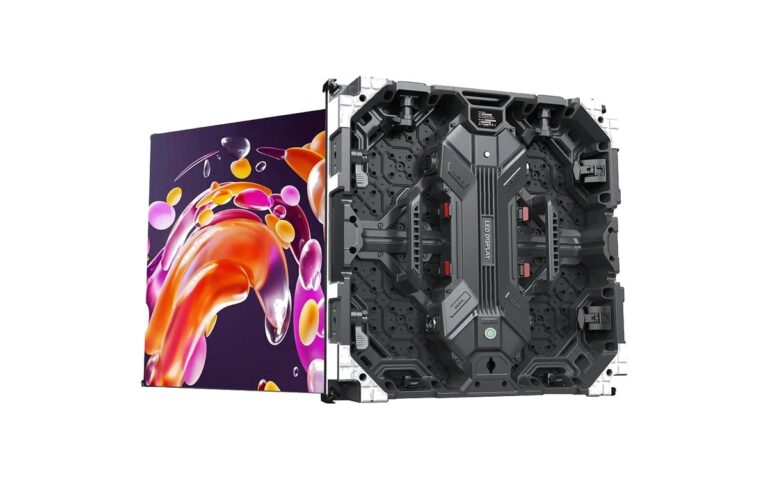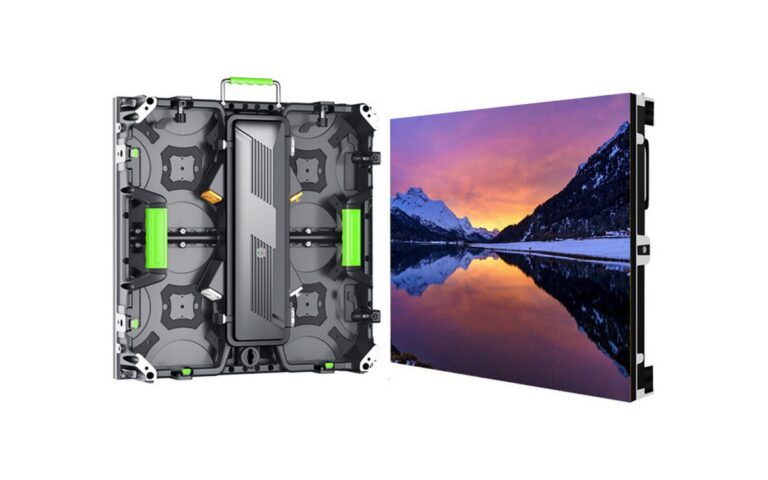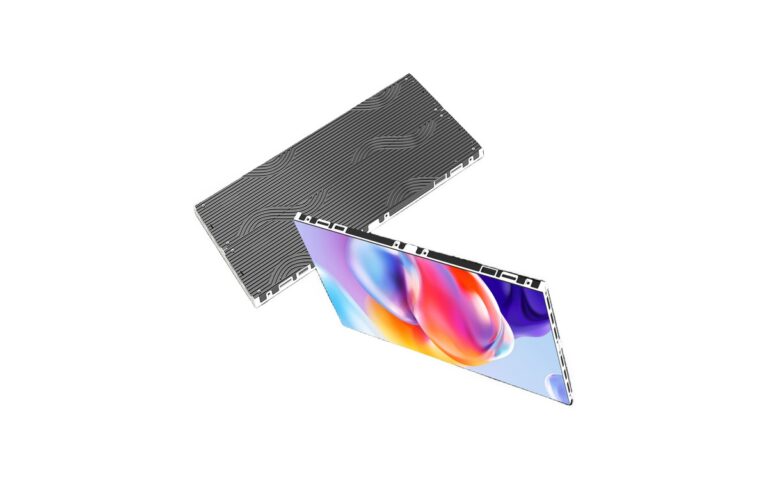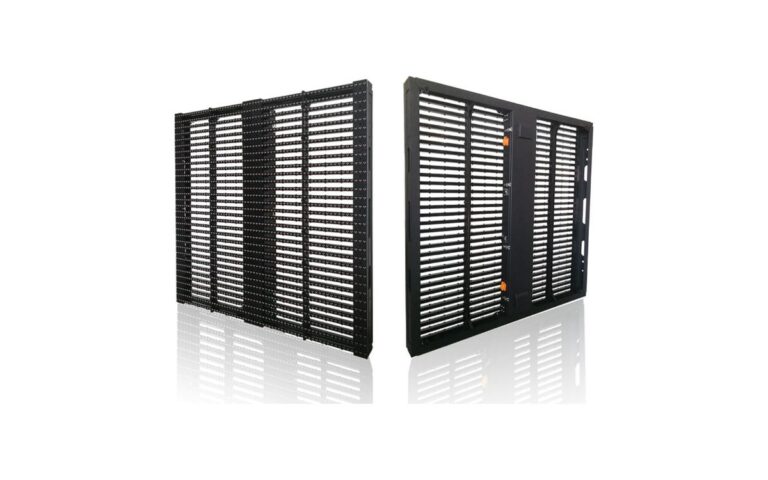
Rental companies building a fleet eventually face this question: standardise on 500×500, or add 500×1000 for tall stages? Both are common, both are supported by the same modules, and both can look identical once the wall is built. The differences show up during load-in, rigging and transport.
What the two formats actually are
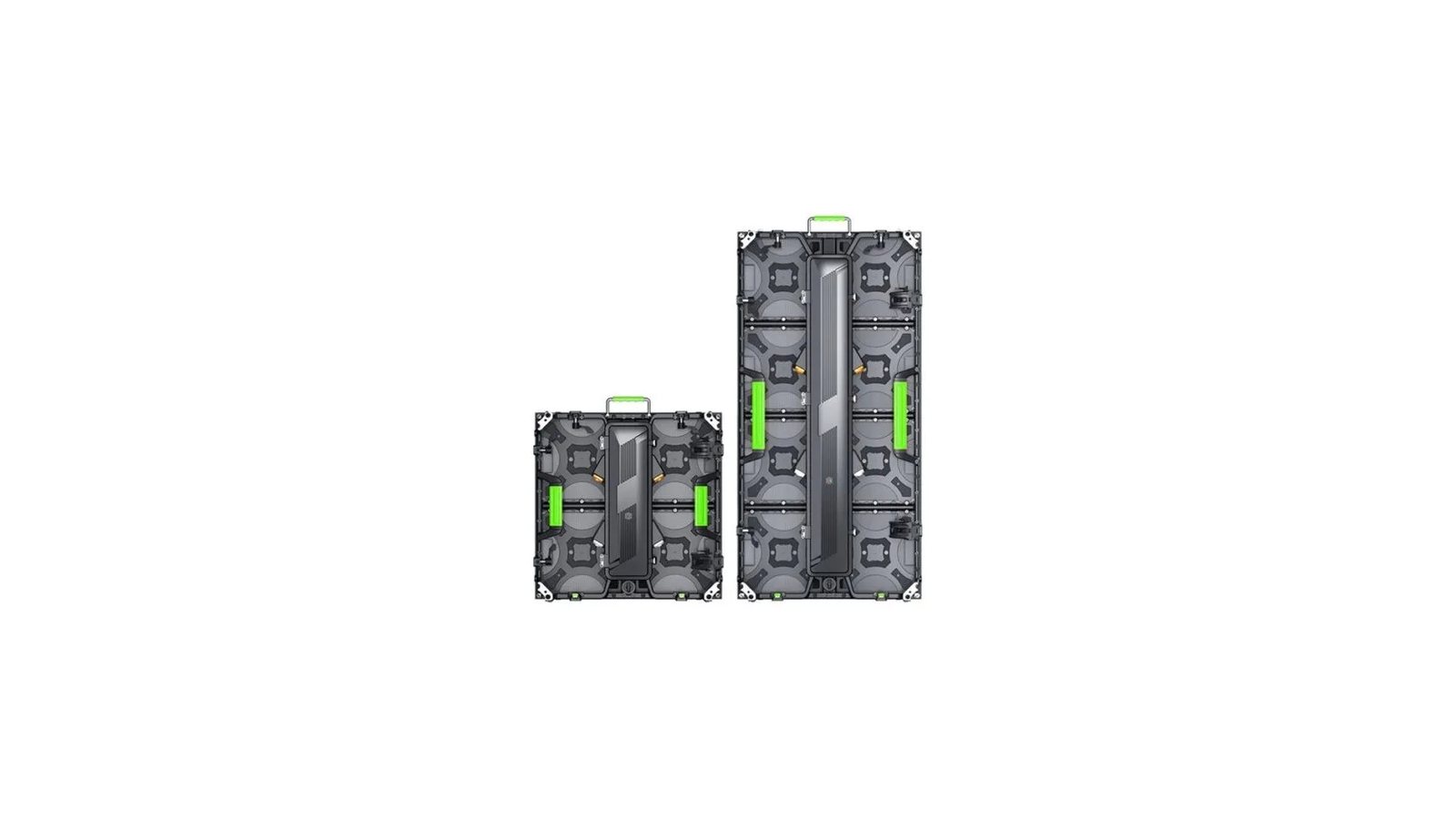
A 500×500 mm cabinet is roughly square and is the most common rental building block. A 500×1000 mm cabinet is twice as tall: same width, double the height, twice the modules and roughly twice the weight. Because the width matches, the two formats can be mixed in one wall as long as the pitch, batch and locking geometry match.
Setup speed and cabinet count
For a 6 m × 4 m wall, a 500×500 build needs 8 columns × 8 rows = 96 cabinets. The same wall in 500×1000 needs 8 × 4 = 32 cabinets. Fewer cabinets means fewer locks, fewer cables and fewer alignment points — a real time saving for a crew working to a schedule. That is the main reason tall stages and church installations favour the 1000 mm format.
Weight, rigging and ground support
Doubling the height roughly doubles the cabinet weight, so each pick point carries more. For flown screens, the rigging plan and rated load must be checked by a qualified rigger either way; the 1000 mm format concentrates more weight per cabinet and per motor. Ground-stacked walls need to consider base stability and wind load on outdoor events. Neither format is “safer” in general — the rigging plan decides.
| Factor | 500×500 mm | 500×1000 mm |
|---|---|---|
| Cabinet count for 6×4 m | 96 | 32 |
| Setup time | More locks and alignment | Fewer connections, faster build |
| Weight per cabinet | Typically 8.5–13 kg | Roughly double |
| Transport volume | More cases, lower stack height | Fewer cases, taller packs |
| Best for | Flexible layouts, small stages, mixed walls | Tall stages, churches, fast load-in |
Transport and storage
500×1000 cabinets need longer flight cases or different internal layouts, and a fork truck or two-person lift becomes more likely. If your warehouse racks and vehicle are sized for 500×500 cases, adding 1000 mm cabinets means new cases and new racking — a cost that belongs in the decision.
Mixing both in one fleet
Many rental companies keep a majority of 500×500 for flexibility and a set of 500×1000 for tall stages. If you mix, order the same pitch, LED batch, power supply and locking system, and confirm the cabinets can be joined vertically and horizontally. Mixing batches later is the usual cause of visible colour differences in one wall.
Locking, alignment and long-term wear
Every additional cabinet is another set of locks that must engage cleanly after hundreds of load-ins. A 96-cabinet wall has roughly three times the connection points of a 32-cabinet wall, so lock quality and frame rigidity matter more in the 500×500 format simply because there are more joints. Check that locks engage without forcing neighbouring cabinets, and ask whether a single damaged latch can be replaced without scrapping the frame.
Flatness is the other long-term factor. Cabinets that flex under handling gradually build visible seams across a wall. A test build of eight cabinets on a flat floor, checked with a straight edge, tells you more than a showroom demonstration.
What changes in the quote
On paper, two formats covering the same area use a similar number of modules, so the LED and electronics content is close. The differences sit in the frame, the locks, the flight cases and the handling labour. A 500×1000 fleet usually costs more per cabinet but less per square metre in cases and setup hours; a 500×500 fleet costs less per cabinet and more in crew time. Neither is cheaper overall — it depends on how often you build tall walls.
Load-in checklist before you commit
Before ordering either format, run the same five checks on a sample: cabinet weight with module and power supply fitted; lock engagement after ten cycles; flatness across four joined cabinets; case size against your vehicle and racking; and spare-part availability for locks, modules and power supplies. If a supplier cannot provide a sample or a test video for these points, the format decision is premature.
Which format suits which project
Corporate backdrops, church stages and tall single-wall designs usually benefit from 500×1000: fewer seams, faster build, fewer cables. Touring productions that reconfigure every night, small venues with narrow load-in paths, and walls that mix horizontal and vertical sections usually stay on 500×500. Rental companies serving both tend to keep a ratio rather than a single format — for example 70% square cabinets and 30% tall cabinets, adjusted after a season of jobs.
Working out the transport difference
Take a 6 × 4 m wall again. In 500×500, 96 cabinets typically pack two to four per flight case, so you are moving 24–48 cases. In 500×1000, 32 cabinets pack two per case, so 16 cases — roughly half the handling, half the case count and a smaller footprint in the truck. If your tour moves every week, that difference compounds across a season; if the wall stays in one venue for a year, it barely matters.
FAQ
Yes, if the width, pitch, batch and locking geometry match. Confirm with the supplier that both formats come from the same production batch before ordering.
For tall walls, usually yes, because there are fewer cabinets and connections. For small or irregular layouts, the square format is often more flexible.
It concentrates more weight per cabinet, so the rigging plan must be checked by a qualified rigger. The rated load of motors, truss and pick points always governs.
Churches often choose 500×1000 for tall backdrops with fewer seams, and 500×500 for side screens or irregular spaces. The stage geometry decides.
Yes in most series — the module size stays the same, only the cabinet frame and module count change.
Compare the Rental-H series, which offers both 500×500 and 500×1000 formats, or send your stage drawing through the inquiry form and we will suggest a cabinet mix with the rigging plan in mind.
Per square metre of screen, with cabinets, control system, structure, installation and spare parts scoped separately. The LED wall price guide explains the five cost drivers and why two quotes for the same pitch can differ.