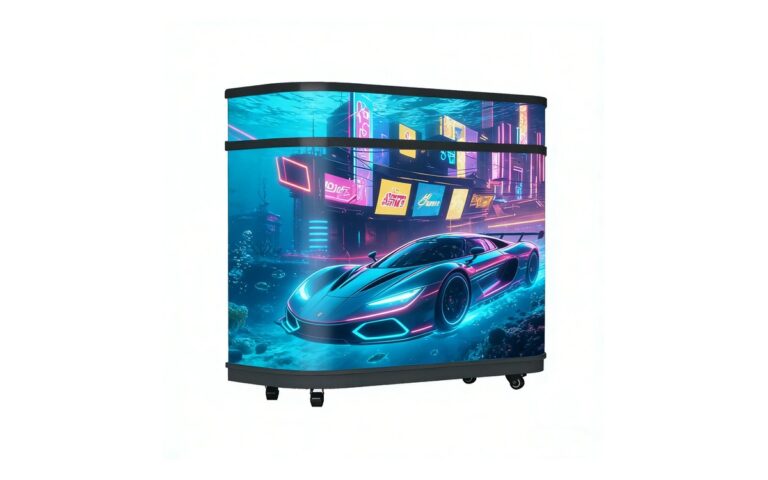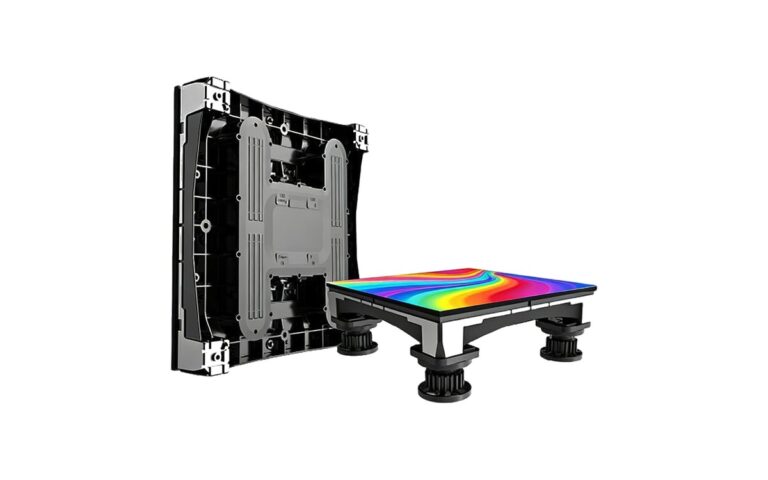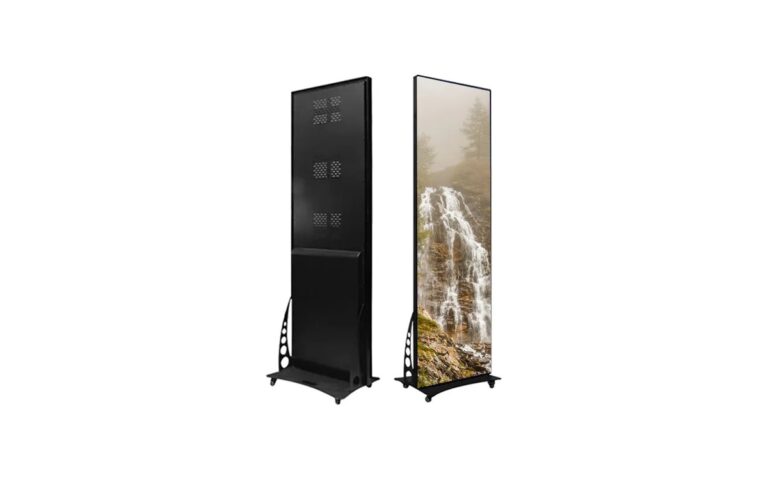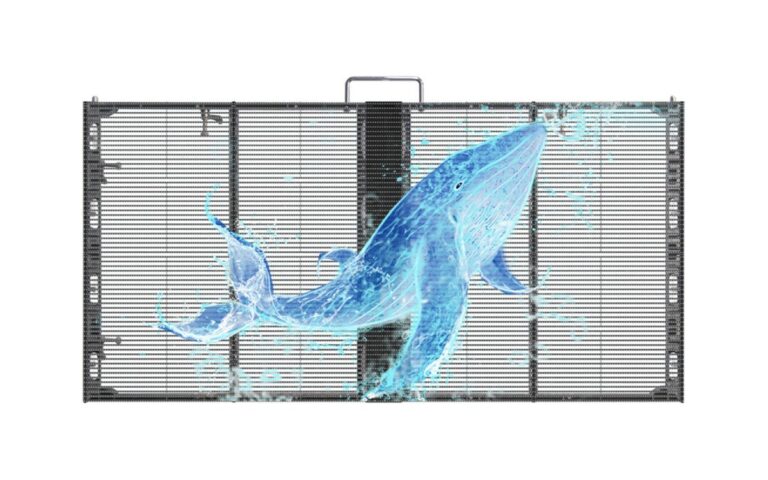

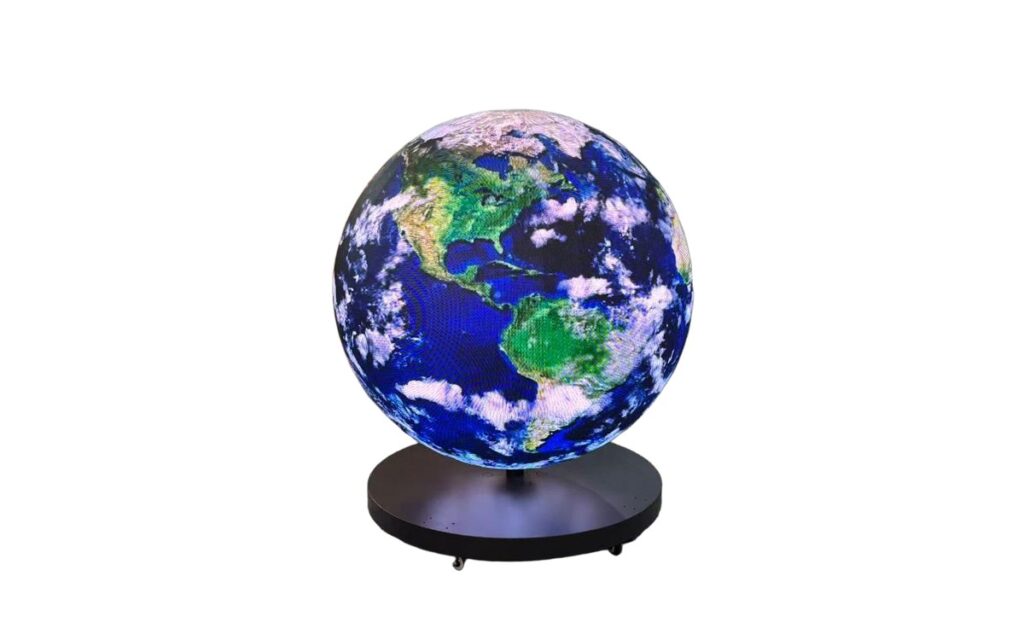
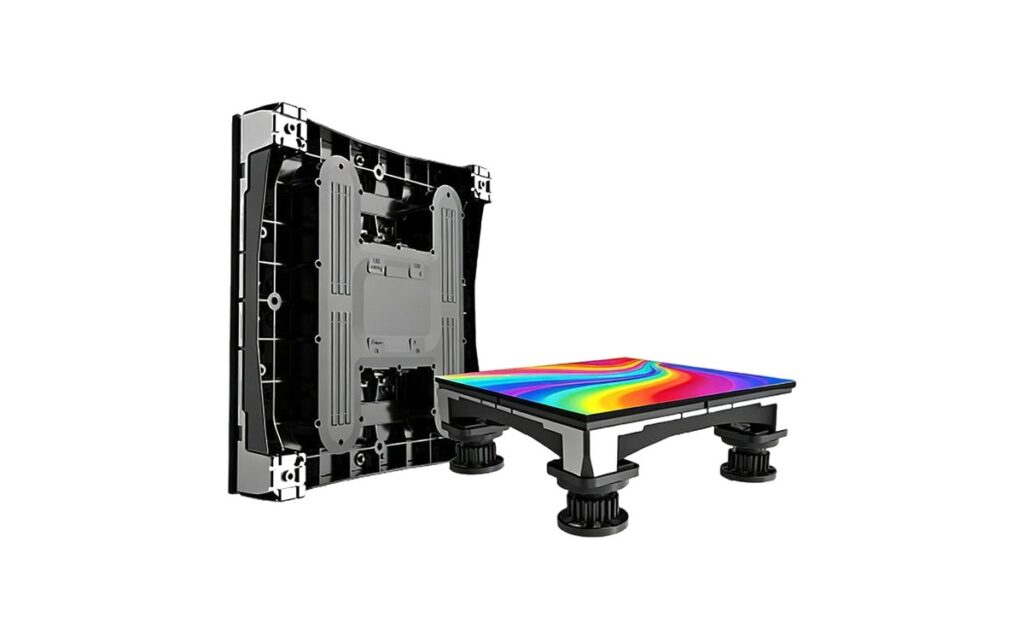
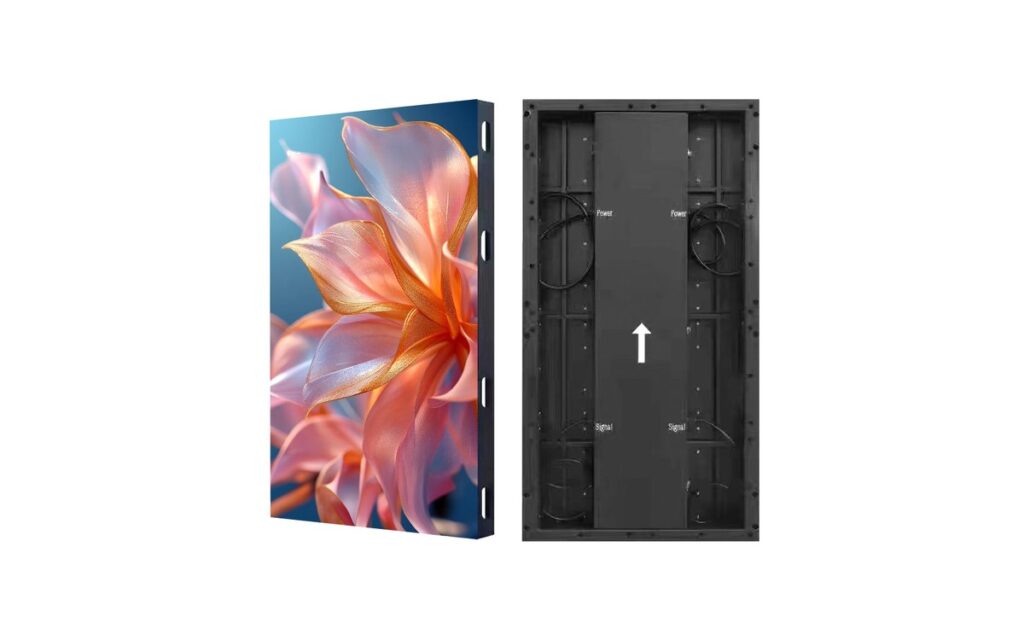
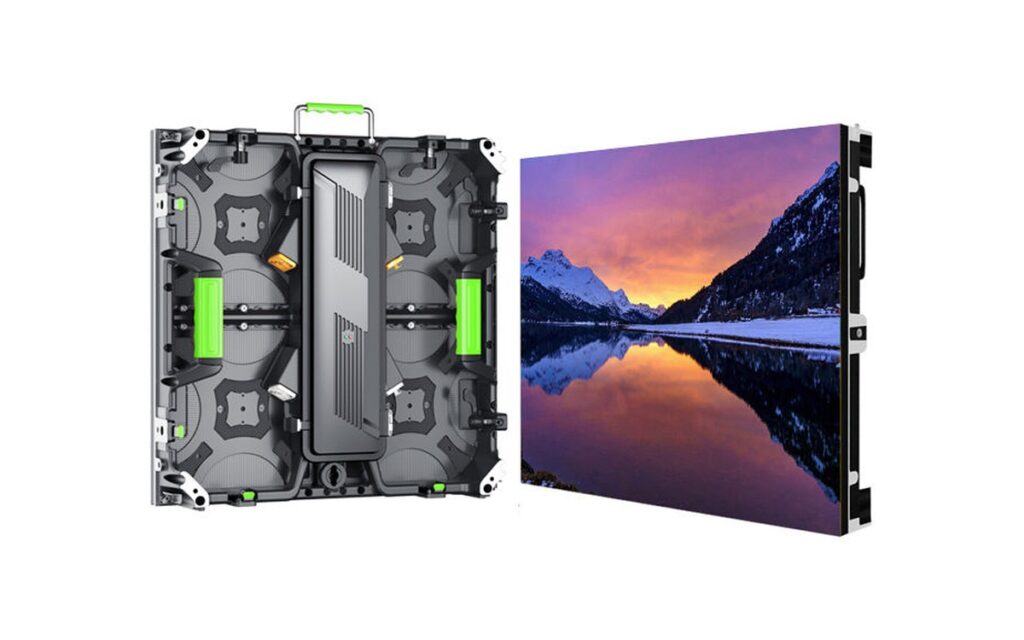
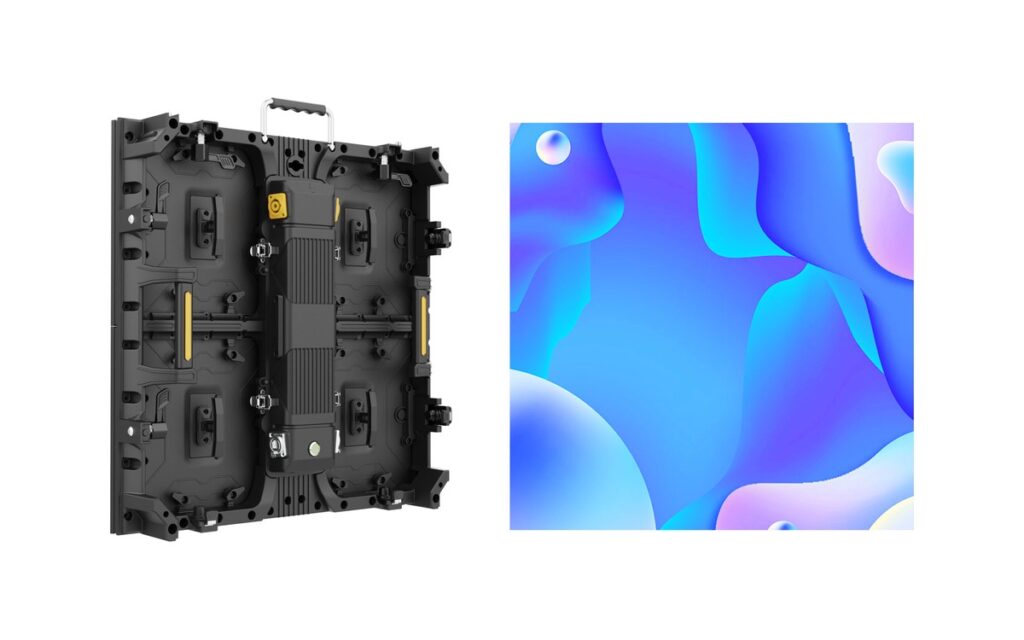
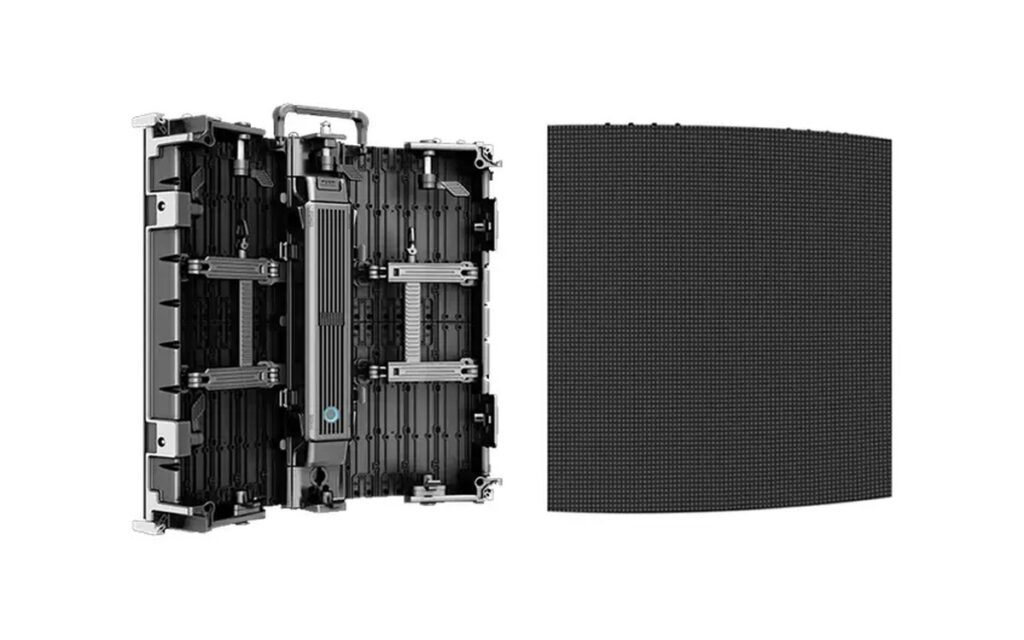
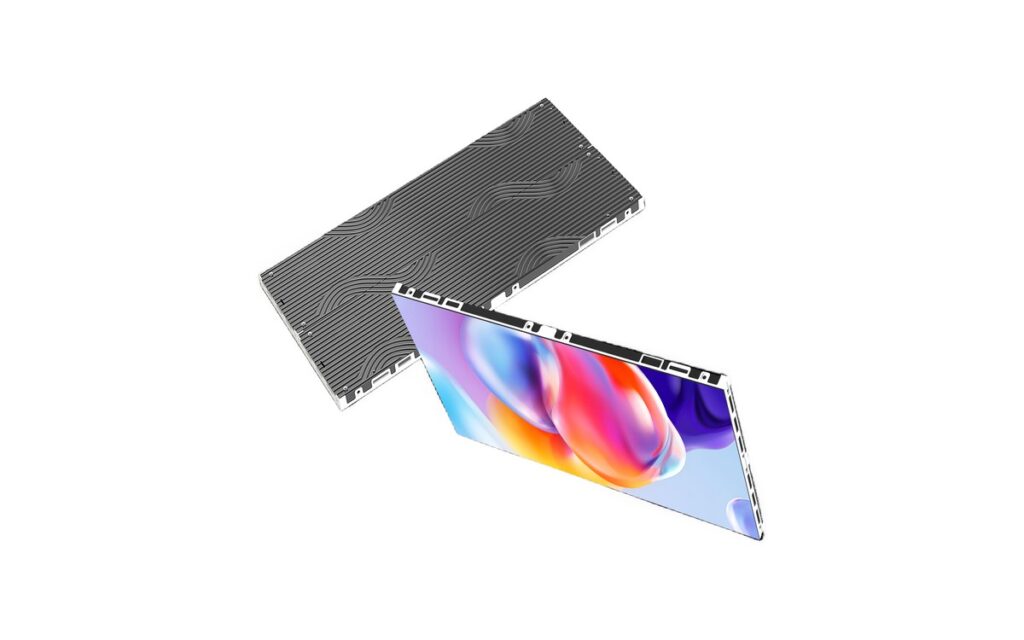
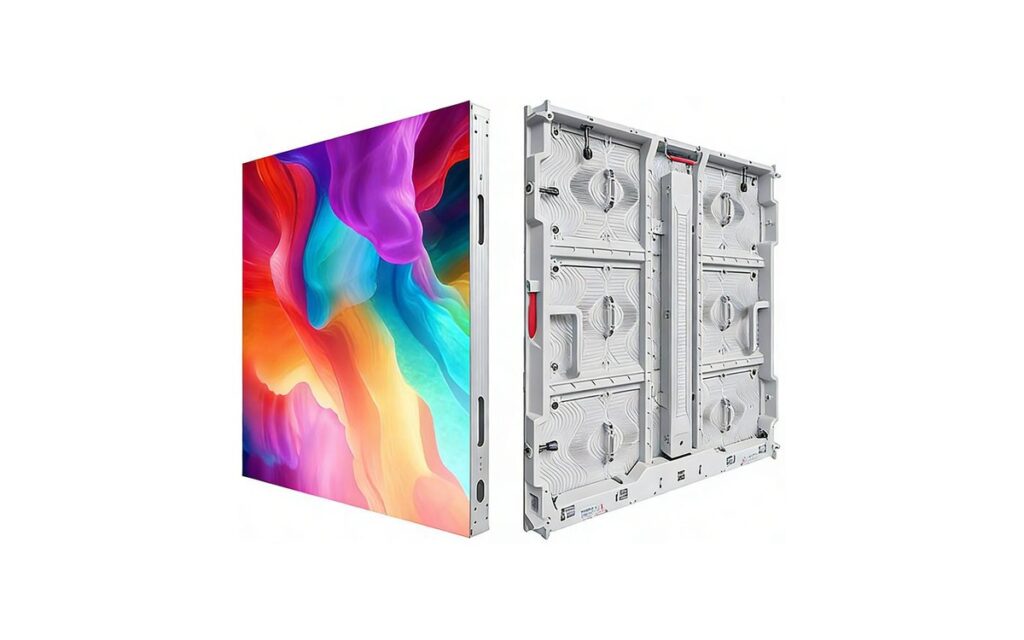
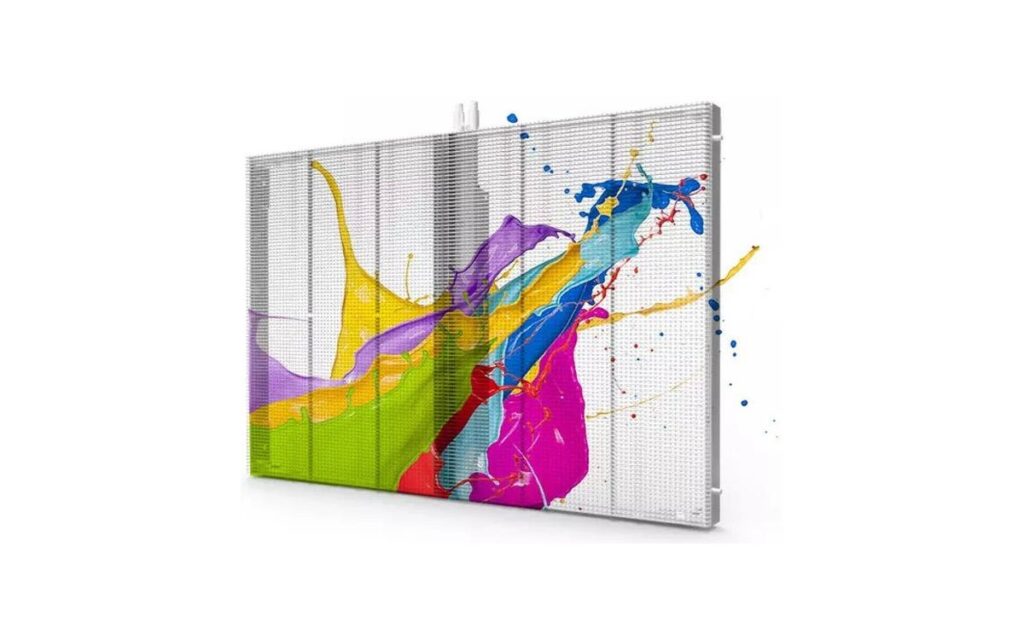
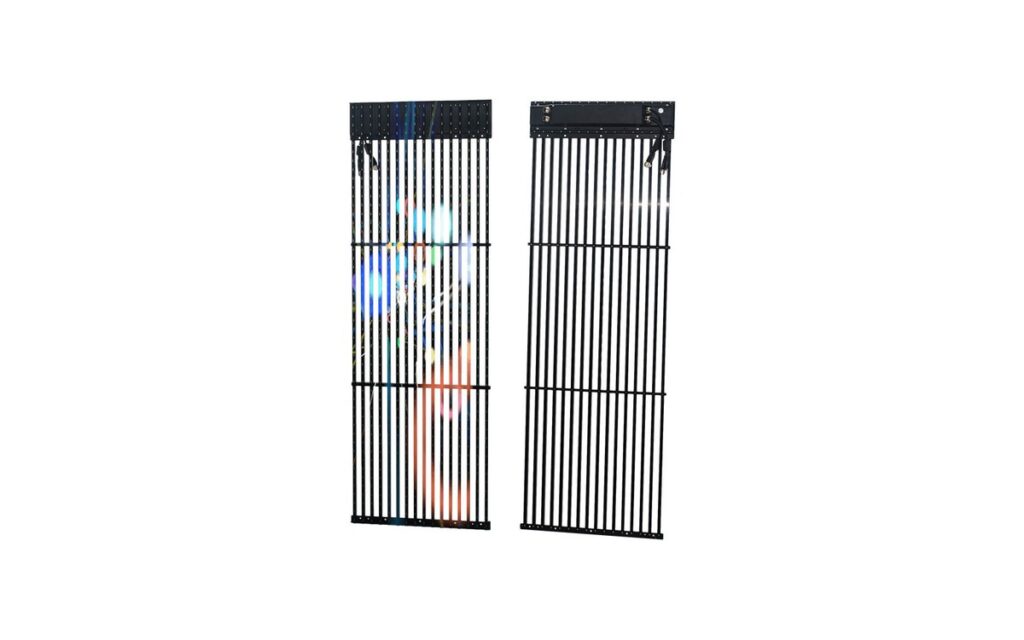
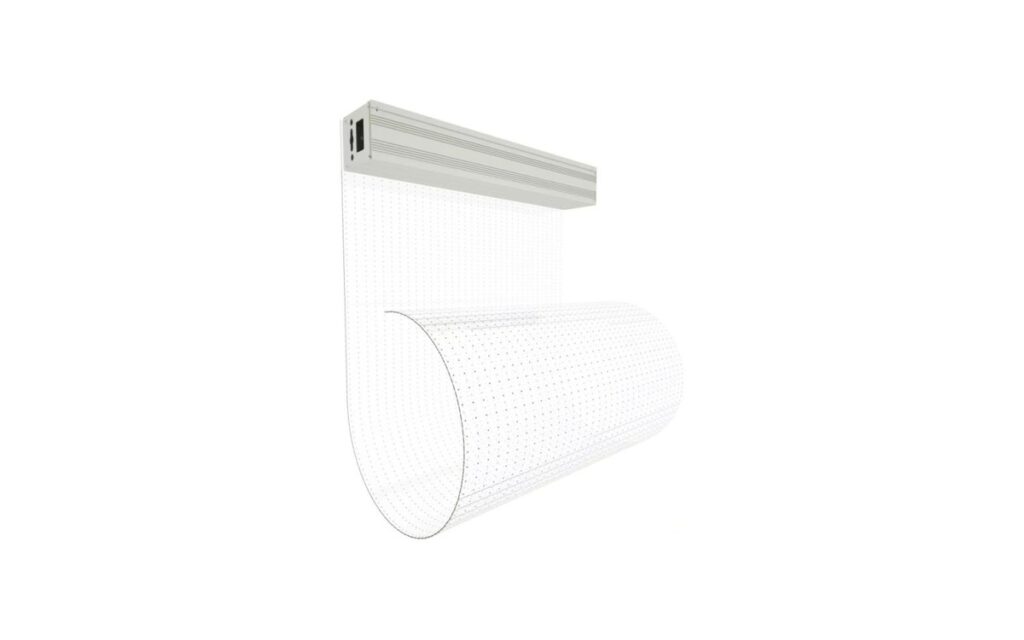
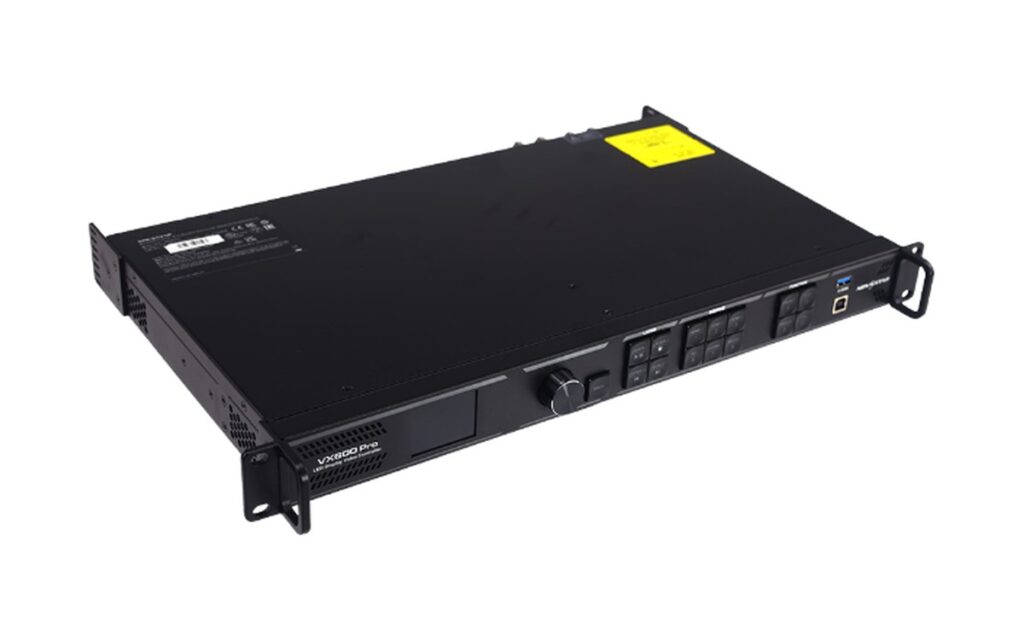

Most LED walls are flat because cabinets are flat. When the structure is curved, a column has to be wrapped, or the design calls for a ribbon or wave, the project moves from cabinets to flexible modules. The electrical design is the same; the mechanical design is not.
What makes a module flexible
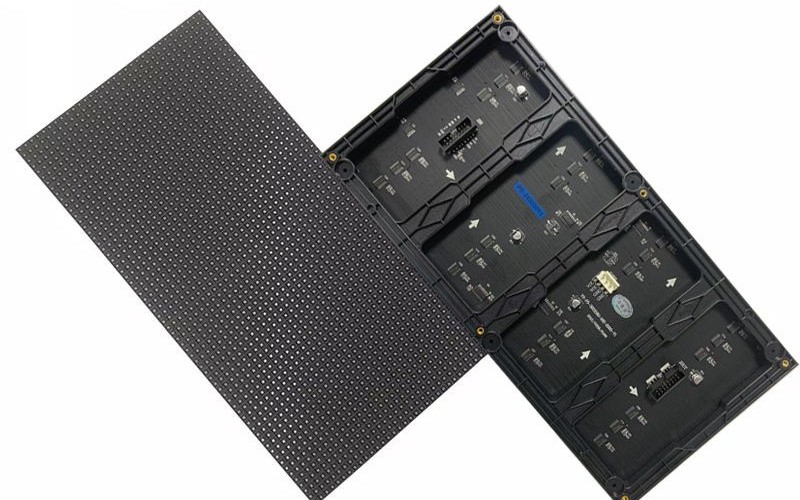
Three parts change: the PCB is thinner and uses a flexible substrate, the mask is soft rather than rigid, and the module is held by magnets instead of screws through a hard frame. That is what allows the module to follow a radius without cracking solder joints.
The trade-off is heat and flatness. A flexible module has less thermal mass, so power per square metre is usually kept lower than a rigid cabinet, and the mounting surface behind it must be built accurately — a flexible module follows the frame, including its mistakes.
Bend radius, pitch and where each fits
| Build | Typical pitch | Module size | Where it fits |
|---|---|---|---|
| Column wrap | P1.86–P2.5 | 240×120 mm | Retail columns, hotel lobbies, showrooms |
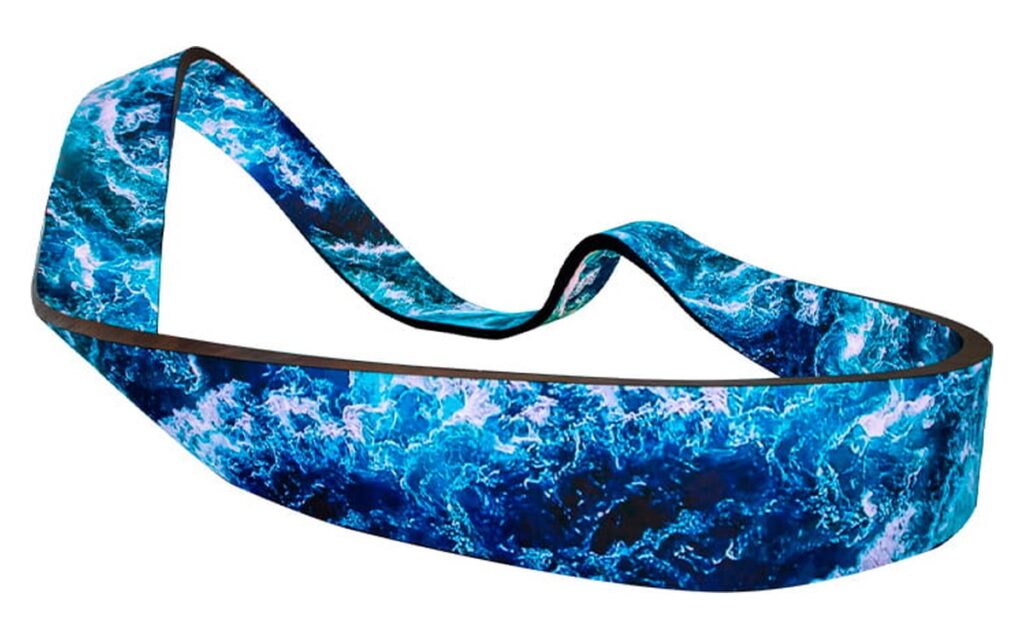
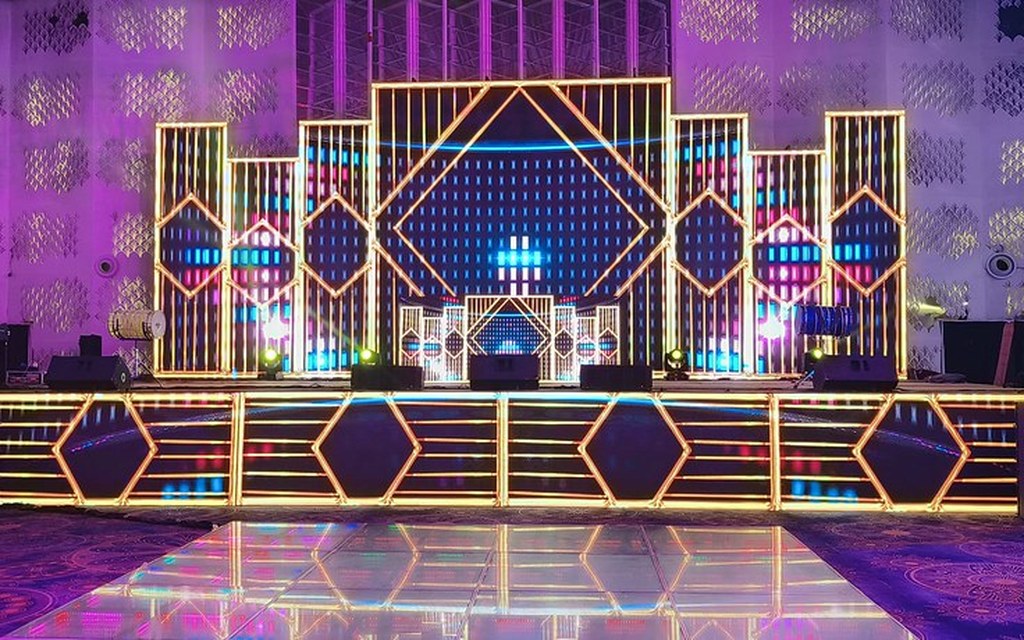
| Wave / ribbon | P2.5–P3 | 240×120 mm | Exhibition stands, stage design, brand zones |
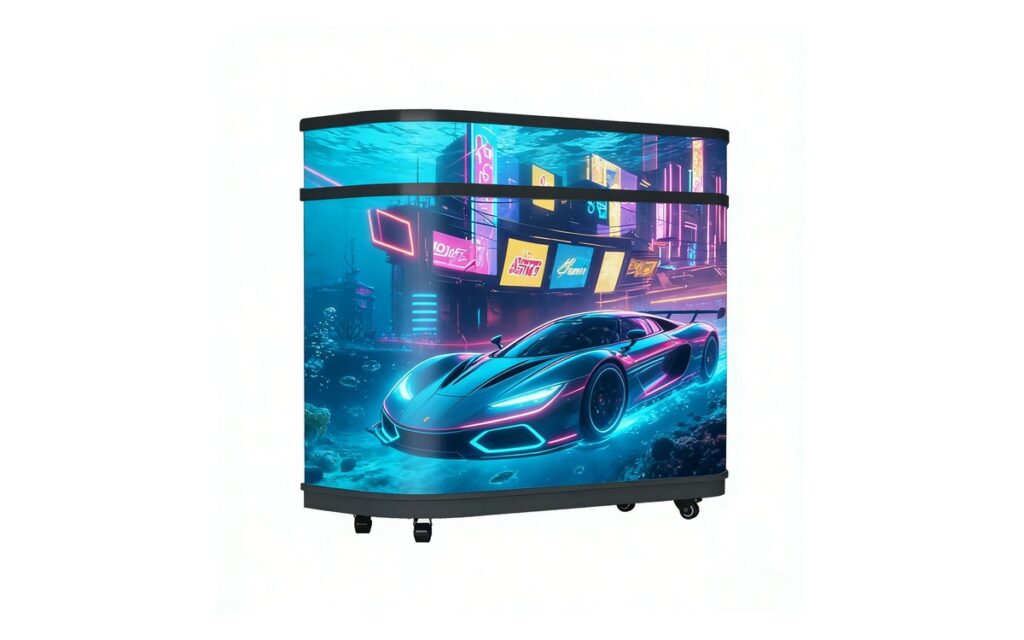
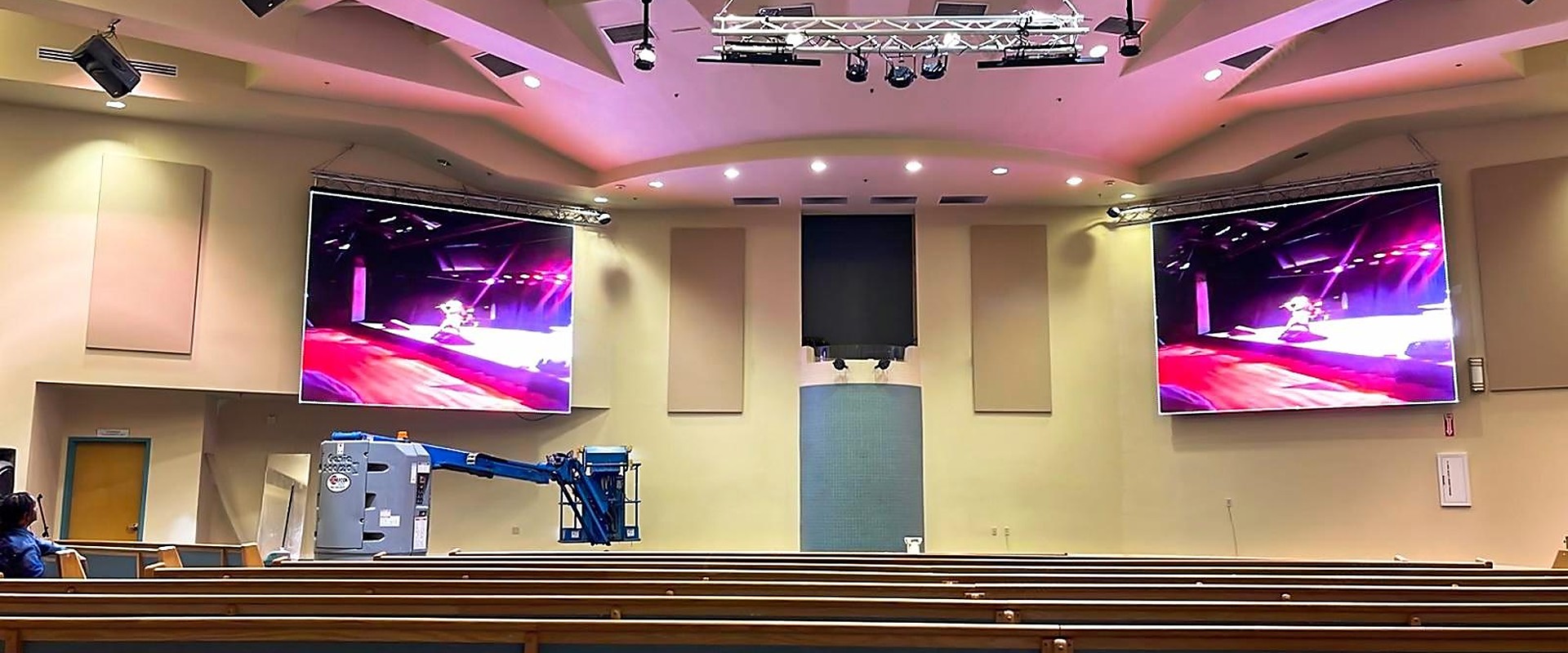
| Large curved wall | P3–P4 | 320×160 mm | Auditoriums, churches, curved backdrops |
Finer pitch means smaller modules and a tighter usable radius. As a rule, the radius is fixed by the module size and the frame design, not by the pitch alone — so a radius drawing is part of the order, not an afterthought.
Where a flexible screen is the right answer
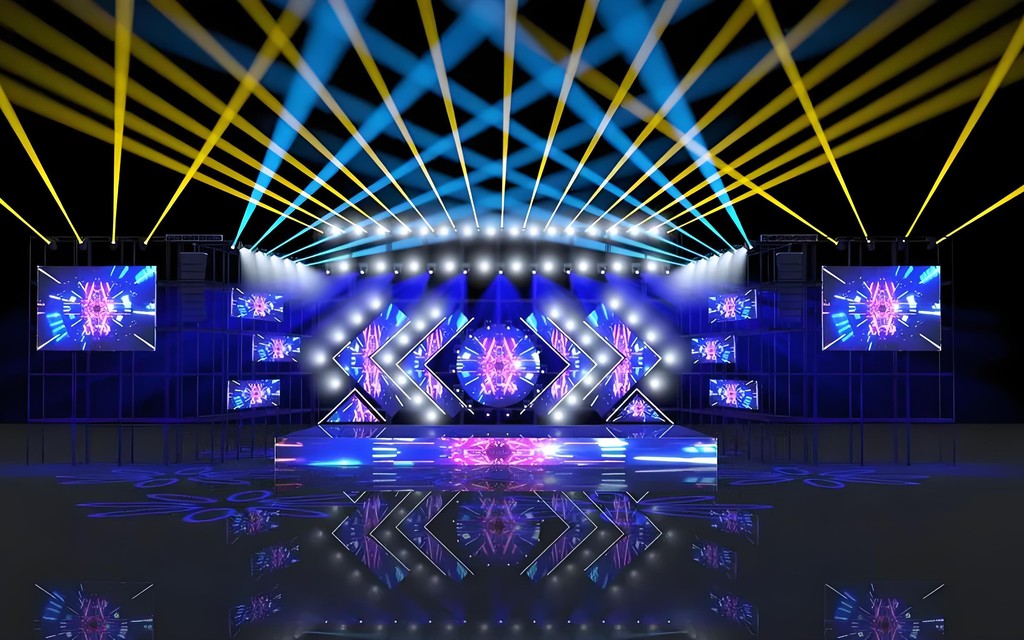
Flexible modules win where the shape is the point: a column that has to disappear into the architecture, a stage backdrop with a wave, a ribbon that runs along a ceiling line. They also make sense when a rigid cabinet would need visible segmentation to fake a curve.
They are the wrong answer for a flat wall. A rigid cabinet is cheaper per square metre, faster to install, flatter, and easier to service. If the wall is flat, use a cabinet.
What to confirm before ordering
Four things decide whether the build works: the radius (inner or outer), the module count per curve, the frame drawing, and who maps the content to the shape. Content is not a rectangle on a curved screen — it has to be mapped to the actual surface, and that mapping is usually done in the processor before delivery.
For a column wrap, also confirm the joint line. A wrap has one seam where the modules meet; its position should be planned away from the main viewing angle.
Frame and mounting detail
A flexible screen is only as good as the frame behind it. The frame defines the radius, carries the magnets and sets the seam positions. For a column wrap, the frame is usually built in two halves so it can be closed around the column; for a wave, it is a series of ribs set to the drawing.
Flatness matters more than with rigid cabinets because a flexible module follows whatever is behind it. A 2 mm step in the frame becomes a visible line in the image. That is why the frame drawing is approved before production rather than after.
Content mapping for a curve
Content is mapped to the module layout, not stretched from a rectangle. A column wrap needs the visual designed around the seam; a wave needs the content to follow the curve so straight lines stay straight. The processor handles the mapping, but the design has to be built for it.
Test the mapping with a grid before the final content is loaded. A grid shows seam alignment and any module that is rotated or offset far faster than a photograph does.
Common questions
Yes, with a sealed frame and outdoor-rated modules. Most flexible builds are indoor because the shapes are architectural, but outdoor versions exist for facades and event structures.
It depends on module size and frame design. Small modules bend tighter; the exact figure is confirmed per project with a radius drawing rather than a single number for the whole range.
No. Flexible modules use the same receiving cards and processors as rigid cabinets, so a Novastar or Colorlight system drives both.
Yes — modules are magnetic and lift off individually, which is also how a damaged module is replaced without dismantling the frame.
Per square metre, yes: flexible modules, a custom frame and the radius work all add cost. The LED display price guide explains which variables move the number.
The processor maps the source onto the actual module layout, so the content is designed for the shape — not stretched from a rectangle after installation.
The modules ship flat; the frame ships in sections. Assembly happens on site, which is also when the radius is set.
Magnetically, from the front. The replacement module is the same size, so the radius is unaffected.