






























Sports LED Display Solutions
Equip stadiums and arenas with perimeter displays, big screens and scoreboard display surfaces — planned around sightlines, protection and live production.
- Perimeter & courtside displays
- Big screens & scoreboards
- Indoor arenas & outdoor venues
- Rigging, structures & control systems
Typical Sports Display Project Challenges
These are the key technical factors to confirm before selecting a sports display system:
- Sightlines from every seat, camera and player position
- Impact protection for perimeter and courtside equipment
- Live video, scoring and sponsor content running together
- Outdoor weather exposure or tight indoor installation space
Choose the Right Sports Display
Perimeter, big screen and courtside options for indoor arenas and outdoor venues.
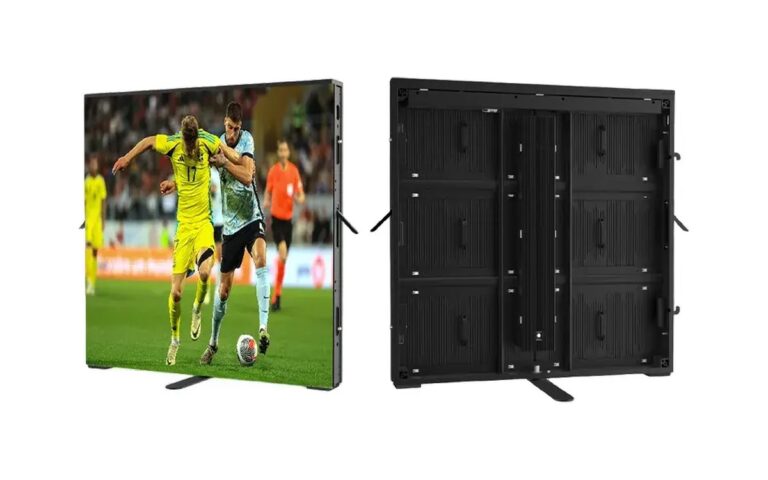
Sport-PRO Series
Perimeter, courtside and venue display applications requiring project-specific cabinet layouts and control integration.
View details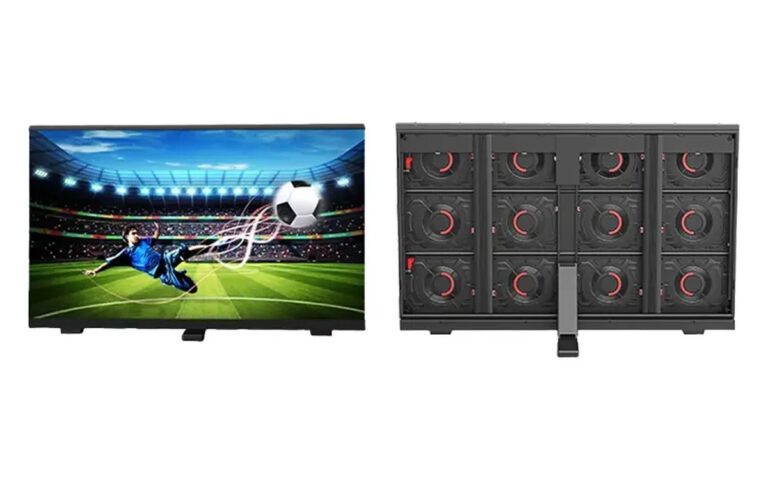
Sport-PLUS Series
Stadium and arena installations planned around viewing distance, content format, mounting position and service access.
View details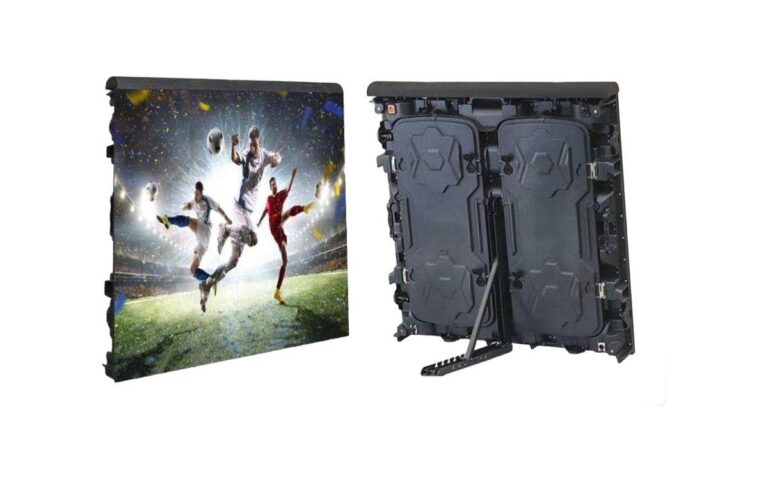
Sport-PMR Series
Sports perimeter and courtside applications where equipment protection, installation method and maintenance access require careful planning.
View details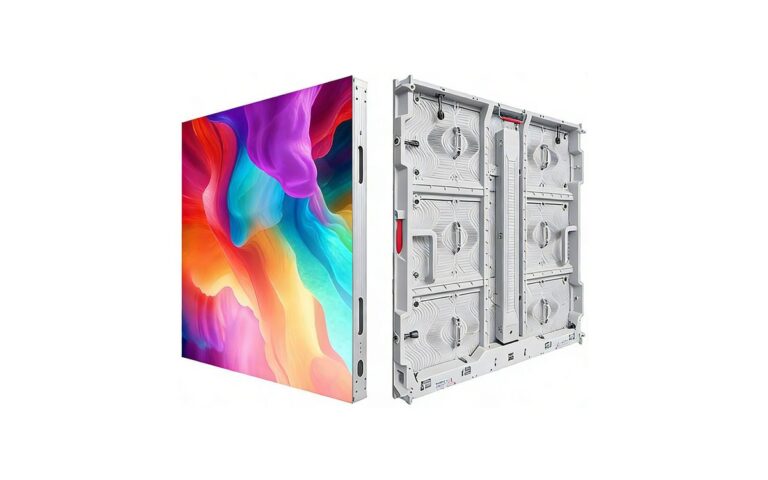
Outdoor-FS PRO Series
Permanent stadium screens, information displays and scoreboard display surfaces installed on fixed support structures.
View details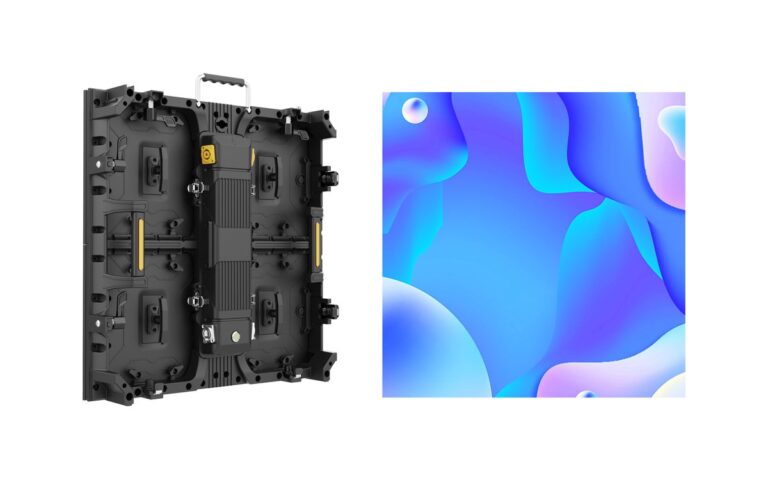
Rental-O Series
Temporary sports events and rental projects requiring cabinets that can be assembled, operated and removed between events.
View detailsQuick comparison
| Series | Best For | Key Consideration |
|---|---|---|
| Sport-PRO | Perimeter and courtside displays | Impact protection and fast content refresh |
| Sport-PLUS | Stadium and arena screens | Configured around viewing distance and venue size |
| Sport-PMR | Perimeter and courtside where equipment moves | Quick setup and removal between events |
| Outdoor-FS PRO | Permanent stadium screens and scoreboard surfaces | High brightness for open venues |
| Rental-O | Temporary sports events and rental projects | Rental cabinets for temporary installations |
Which Display Fits Your Sports Venue?
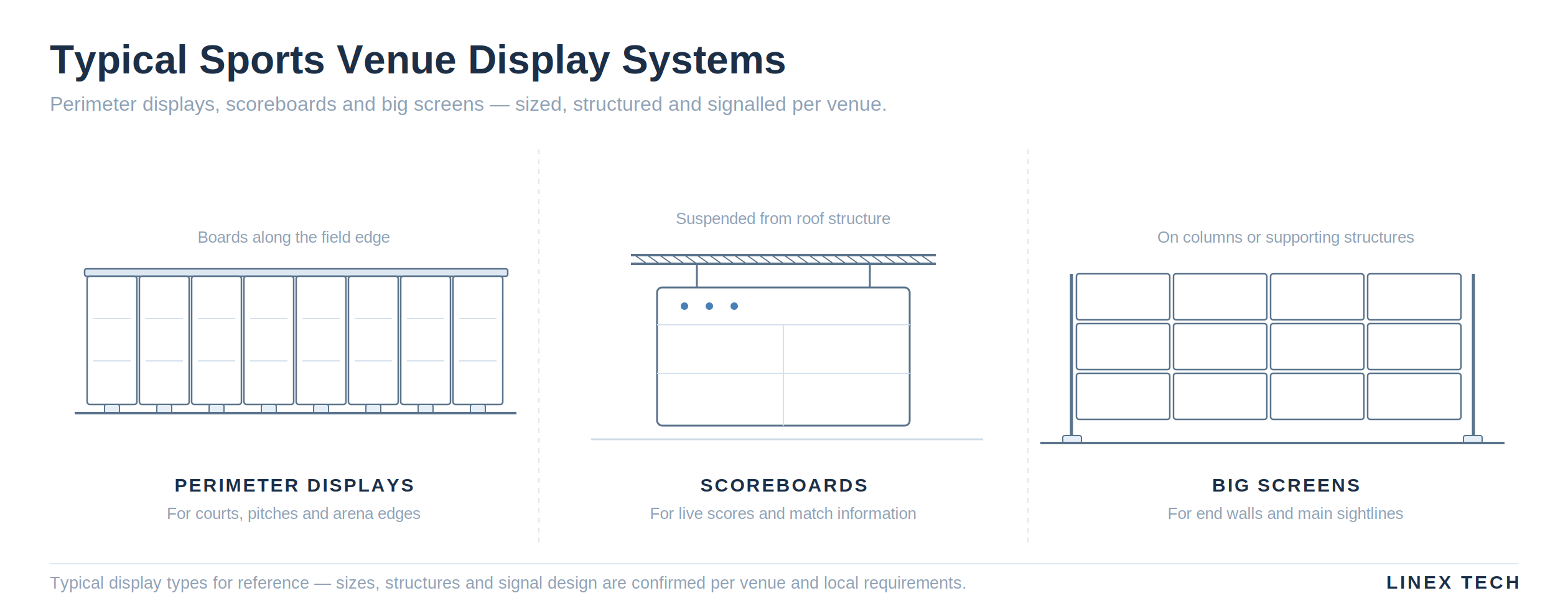
Perimeter and courtside displays carry sponsor messages and short announcements close to the field, while big screens serve the whole venue with live video, replays and scores. Temporary rental systems support events that move between venues. The final configuration depends on sightlines, viewing distances, protection requirements and the live production workflow.
Perimeter LED display specification for stadiums
Perimeter boards are judged by broadcast, not by spectators. The camera sees the board at a shallow angle, so refresh rate, brightness consistency and a matte surface matter more than fine pitch. Cabinets are usually 1600×900 mm with a 101 mm depth, protected to IP68 on the front face for ball impact and rain, and mounted on a frame that meets the venue’s safety requirements.
| Parameter | Typical value |
|---|---|
| Cabinet size | 1600×900×101 mm |
| Pixel pitch | P6.67–P10 |
| Brightness | 6,500–10,000 nits |
| Protection | IP68 front / IP66 rear |
| Refresh | 3,840 Hz and above for slow-motion |
Sports Display Planning Checklist
-
Define the role of each display
Perimeter boards and courtside displays place content close to the field or playing area. They are commonly used for sponsor messages, event branding, short announcements and coordinated graphics. Big screens serve a broader audience across the stadium or arena; typical content includes live video, replays, scores, timing information, player details and venue messages. A venue may combine perimeter, courtside and big-screen systems, but each display should be selected according to its location, audience, content source and operational role.
-
Plan dimensions around viewing conditions
Viewing conditions vary by seating position, camera angle and distance, so display dimensions, content scale and installation height should be planned together. Longer viewing distances generally require larger text, clear graphics and suitable overall screen dimensions.
-
Check positions, structures and protection
Display positions should be checked against spectator sightlines, camera views, player areas and venue circulation routes. Mounting structures, edge protection and other protective measures depend on the location and applicable project requirements. The design should also provide practical access for module, power, signal and cabinet maintenance without unnecessary disruption to venue operations.
-
Plan signals, redundancy and control
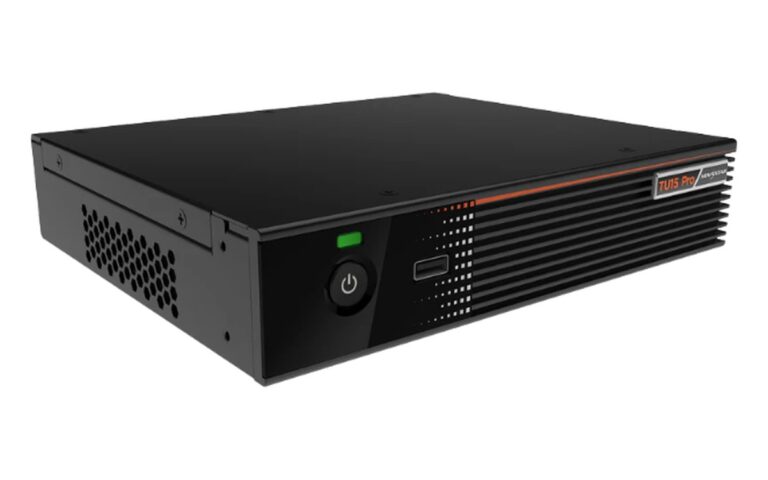
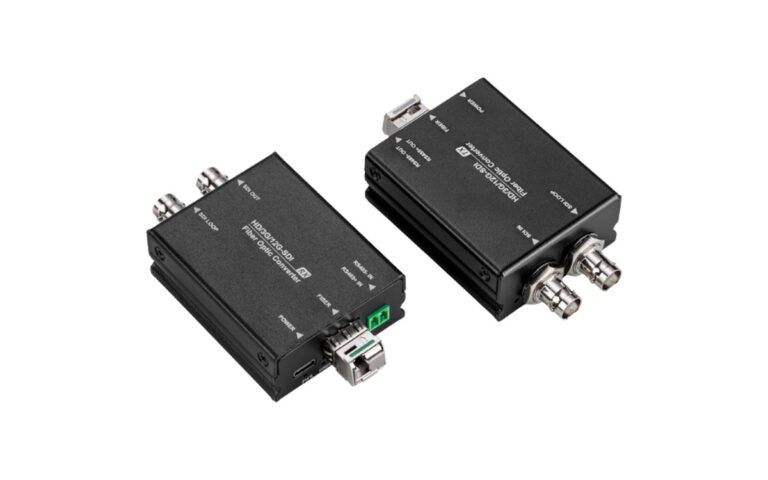
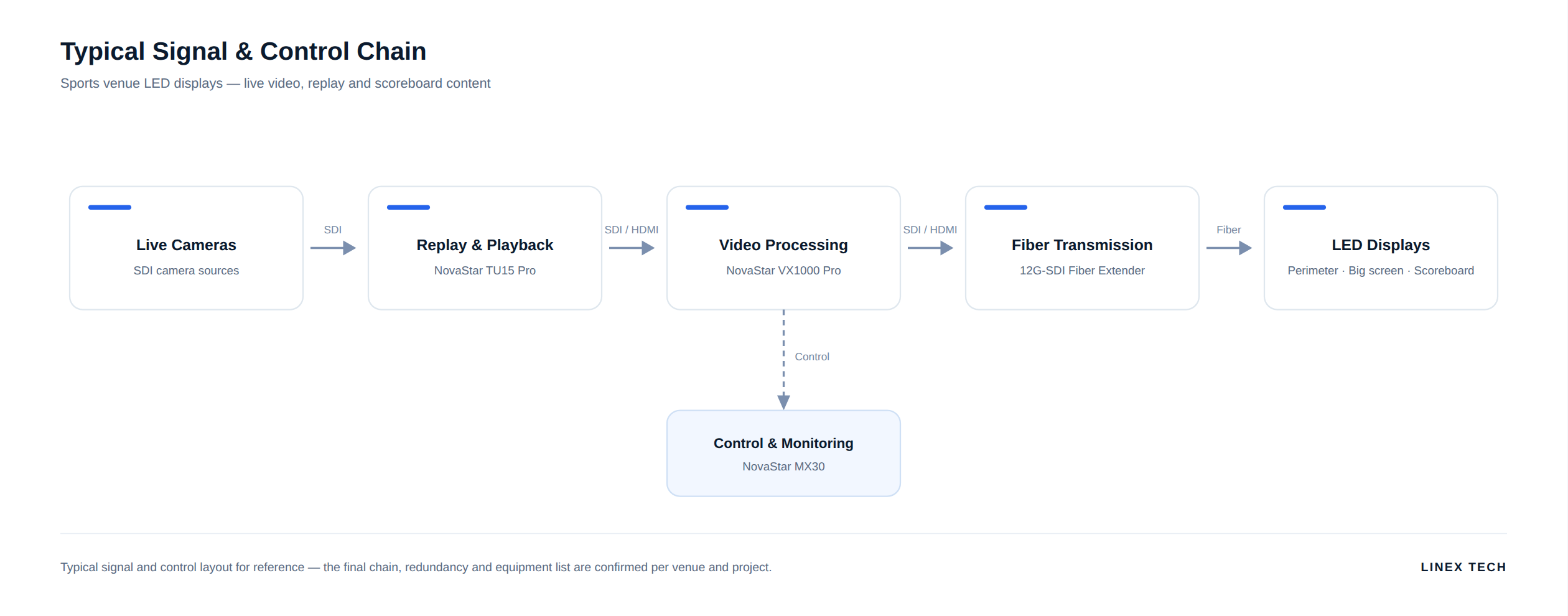
Live video, scoring data, advertising and scheduled content may come from different systems. Confirm signal formats, switching, processing, redundancy needs and control responsibilities before installation.
-
Confirm indoor or outdoor conditions
Indoor arenas and outdoor stadiums have different exposure, structural and operating conditions. Outdoor projects require particular attention to weather exposure and environmental conditions, while indoor projects may place greater emphasis on close viewing, limited installation space and integration with existing AV systems.
Recommended System Configurations
Typical sports venue setups we configure and supply as complete systems — displays together with control, protection and signal.
Perimeter & Courtside LED Systems
Sport-PRO / Sport-PMR Series — sponsor messages, short announcements and venue advertising
View Related ProductsStadium Big Screens & Scoreboard Display Surfaces
Sport-PLUS / Outdoor-FS PRO Series — live video, replay content, venue information and sponsor media
View Related ProductsTemporary Sports Event Displays
Rental-O Series — rental LED systems for tournaments and mobile events
View Related Products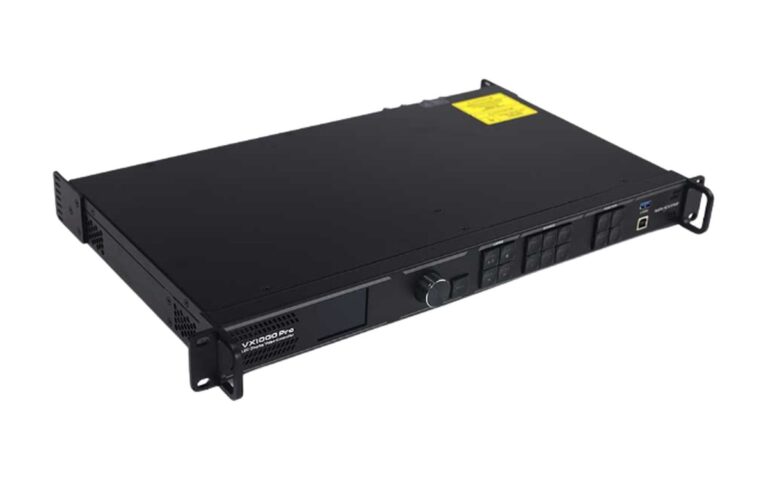
How to Select Your Sports Display Configuration
Configuration follows the venue, the audience and the operational role of each screen.
| Project Factor | What We Consider |
|---|---|
| Display role | Perimeter branding, live video, scores or venue messages |
| Viewing conditions | Spectator seats, camera angles and viewing distances |
| Positions and structures | Sightlines, edge protection and mounting design |
| Signal and control | Live video, scoring data, advertising and redundancy needs |
| Indoor or outdoor | Weather exposure, thermal and structural conditions |
| Venue operations | Maintenance access without disrupting events |
Typical recommendations are a starting point only. The final configuration is confirmed against venue drawings, sightlines and operational requirements.
Sports Display System Capabilities
- Perimeter, courtside, stadium big screen and arena LED display systems
- Fast-refresh performance for live camera coverage
- Protective structures for equipment near the field
- Live video, replay and sponsor media content control
- Indoor and outdoor cabinets for different venues
- Service access planned around venue operations
Application References
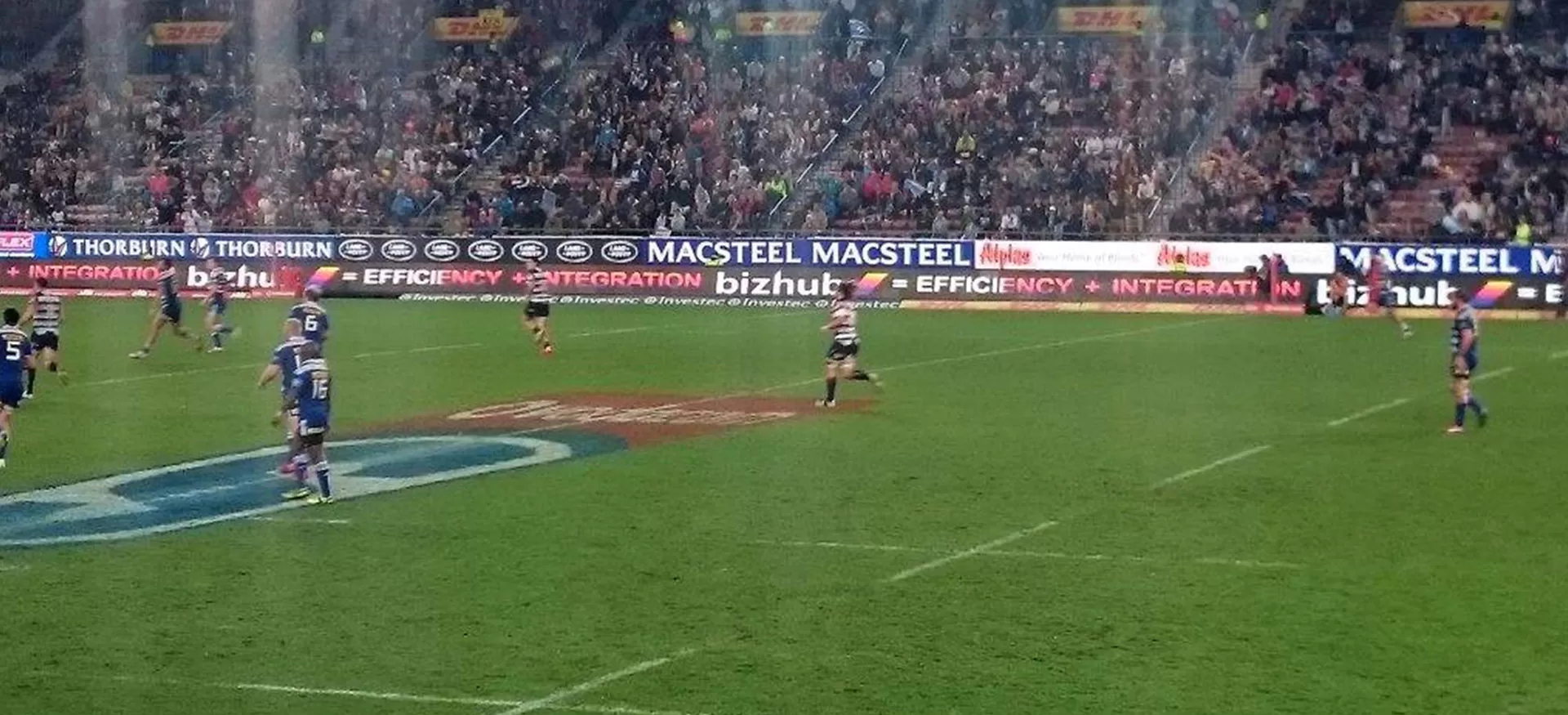
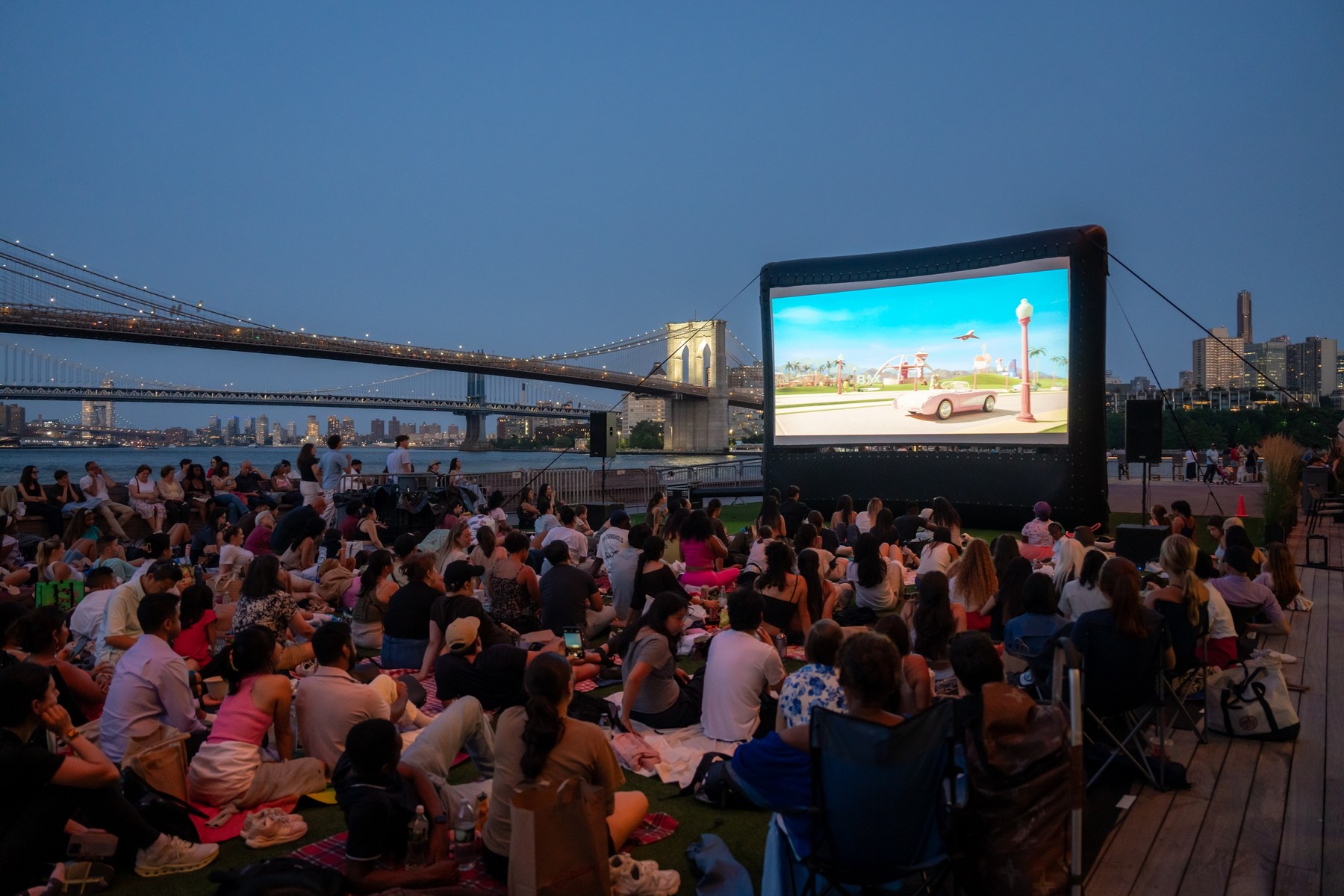
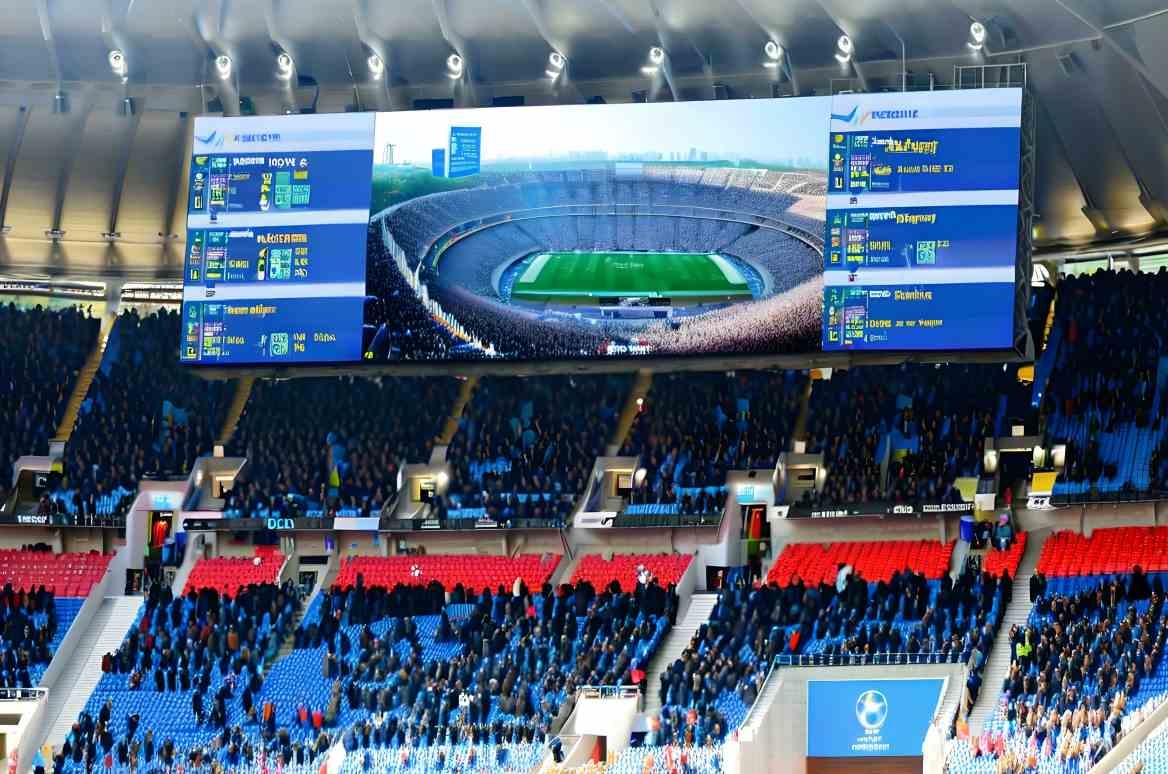
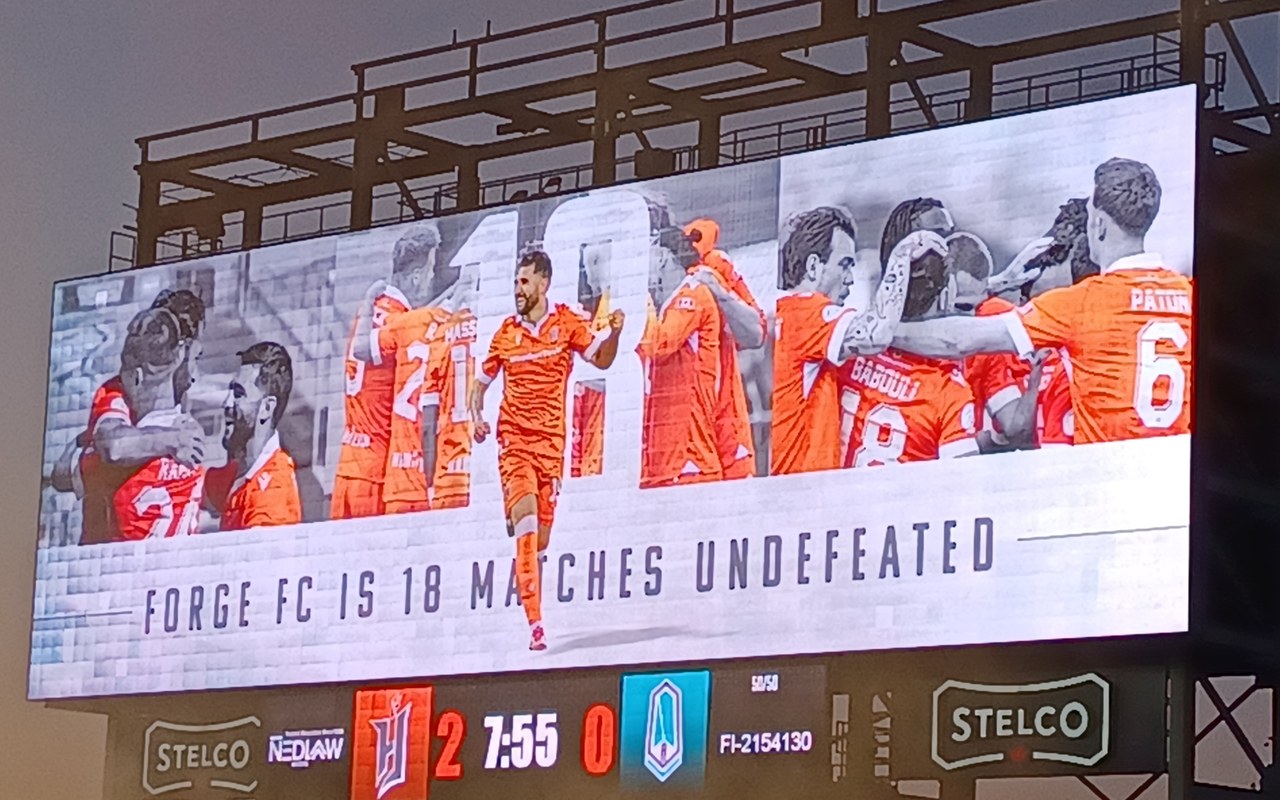
Typical sports venue configurations for reference. Each project is engineered to its own venue, sightlines and event operations.
Sports Display FAQ
Which type of sports LED display should I choose?
Start with the display’s role, location and expected audience. Perimeter and courtside displays are generally selected for field-level messaging, sponsor content and event graphics. Big screens are used for video, replays and information viewed across the venue, while scoreboard display surfaces prioritize clear match data. Final selection depends on viewing distance, screen dimensions, installation method, content sources, maintenance access and whether the system will be permanent or temporary.
How should viewing distance affect the display design?
Viewing distance affects screen size, content scale and the level of detail that spectators can recognize. Displays viewed from distant seating normally need larger text and simpler graphics, while courtside displays may be seen at shorter distances and from sharper angles. There is no single specification for every venue. Review the nearest and farthest viewing positions, seating layout, camera requirements and intended content, then confirm the proposed configuration against the product datasheet.
Can sports displays show live video, scores and advertising?
Sports LED systems can be configured for live video, scoring information, advertising, announcements and scheduled graphics, subject to the selected control equipment and content workflow. Confirm how video feeds, scoreboard data and media files will enter the system, and which operator controls each source. Signal format, resolution, switching, synchronization and backup requirements should be agreed with the venue’s AV, broadcast and scoring-system teams before equipment is specified.
What should be considered for player and spectator safety?
Safety planning should cover display position, support structures, cable routing, electrical distribution, access control and possible contact near the playing area. Perimeter and courtside installations may require protective features selected for the sport and venue rules. Structural calculations and local regulations remain project-specific. Installation methods, emergency routes and maintenance procedures should be reviewed by the relevant contractor, engineer and venue operator before installation and again before events begin.
What is different between indoor arena and outdoor stadium displays?
Indoor and outdoor installations face different operating conditions. Outdoor displays may be exposed to rain, sunlight, wind, dust and wider temperature changes, so cabinet selection and supporting structures must suit the site. Indoor arenas may involve shorter viewing distances, restricted mounting space and closer coordination with lighting and other AV equipment. Required protection, brightness, ventilation and structural design depend on the environment and should be confirmed against project requirements and product datasheets.
What information is needed before requesting a proposal?
Provide the venue type, indoor or outdoor location, intended display use, approximate screen dimensions, viewing distances and preferred installation position. Also identify whether the system is fixed or temporary, the expected content sources, available power, control-room location and required maintenance access. Drawings, site photographs and structural information are useful where available. LINEX can then review suitable series options, but final specifications remain subject to technical confirmation and project conditions.