There is no single price per square metre for an LED display. A quote is built from five variables: pixel pitch, brightness and IP rating, cabinet construction, the electronics package (driver ICs, power supply, control system) and order scope — quantity, steel structure, shipping and installation. Two suppliers can quote the same pitch and still differ by a wide margin because they are not quoting the same bill of materials.
This guide explains what each variable does to cost, so you can compare quotations on equal terms instead of comparing headline numbers.
Why the industry quotes per square metre
LED displays are modular: cabinets tile to any size, so the natural unit is the square metre. It also lets buyers compare options quickly — a P2.5 indoor wall and a P6 outdoor billboard can both be expressed as a rate per square metre, even though the products share almost nothing else.
The trap is that the rate only covers the screen. It rarely includes the steel structure, installation, commissioning, taxes or freight, and it assumes a standard cabinet and a standard control system. Ask what is inside the rate before you compare it with another supplier.
Driver 1: pixel pitch — the largest single factor
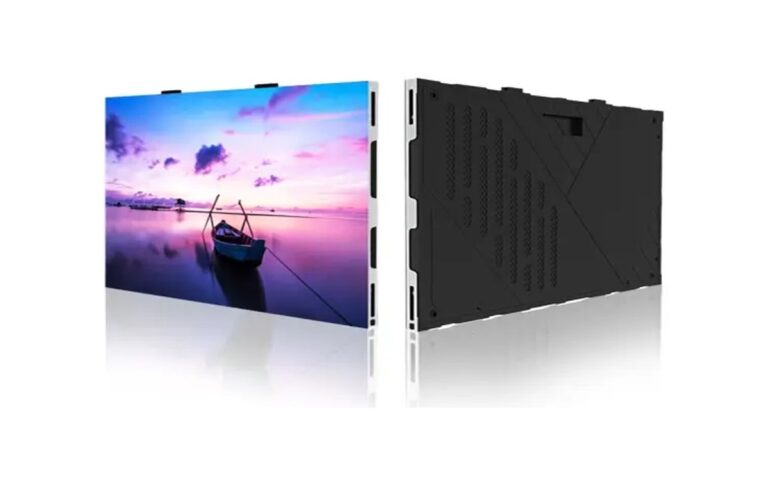
Pixel pitch is the distance between LED lamps, in millimetres. Halving the pitch roughly quadruples the number of LEDs, driver channels and receiving cards per square metre. That is why a P1.86 fine-pitch panel costs several times more per square metre than a P4 outdoor cabinet, even though the cabinet may be smaller.
Pitch also decides viewing distance. As a working rule, comfortable viewing distance in metres is roughly the pitch in millimetres — a P2.5 screen reads cleanly from about 2.5 metres, a P6 from about 6 metres. Specifying a finer pitch than the room needs is one of the most common ways buyers overspend.
Related reading: fine pitch LED displays and COB LED display specifications.
Driver 2: brightness and IP rating
Indoor screens are built for 600–1,200 nits. Outdoor screens need 5,000–10,000 nits to stay readable in daylight, which means different LEDs, higher drive current, better thermal design and a sealed cabinet. The same pitch sold as an indoor and an outdoor product is not the same product.
IP rating adds cost in gaskets, sealing, coatings and cabinet tolerance. IP65 covers most facades and billboards; IP66 is specified where driving rain, dust or wash-down is heavier; sports perimeter displays often use IP68 on the front face because they sit at ground level.
Related reading: IP65 vs IP66 outdoor LED screens.
Driver 3: cabinet construction
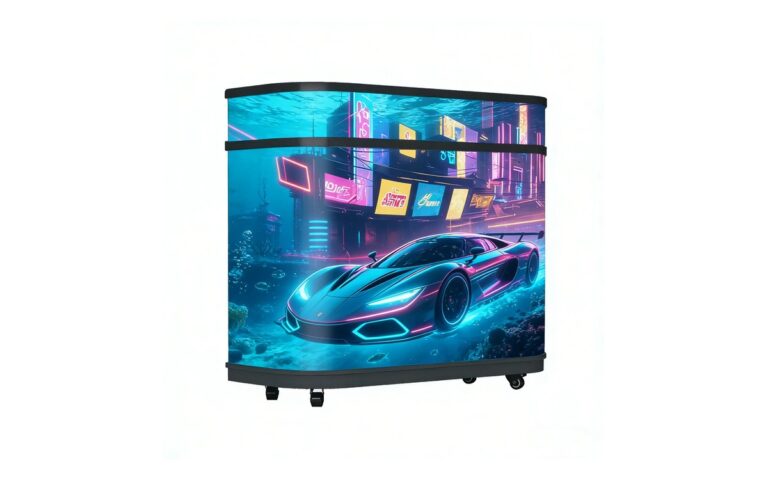
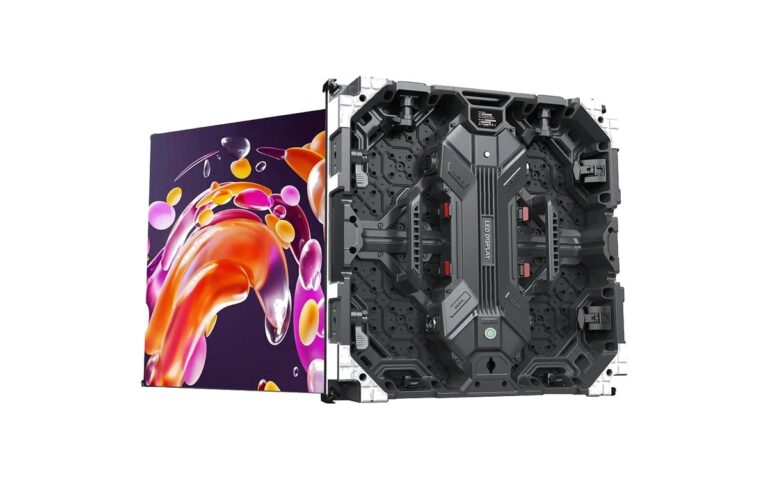
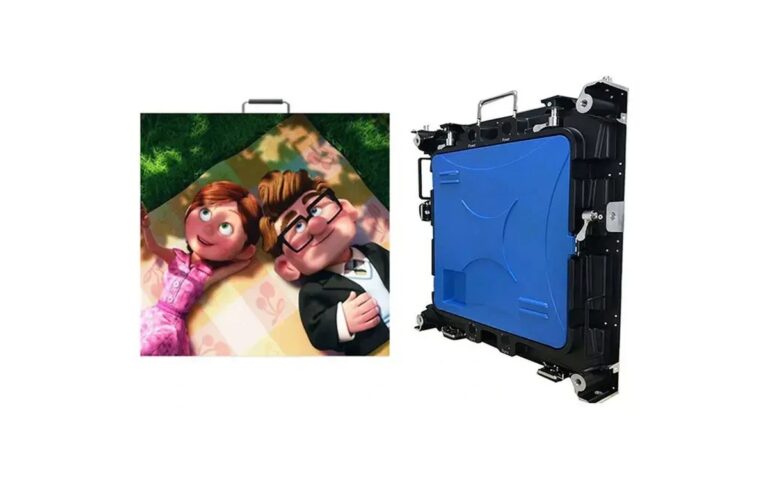
The cabinet is the second-largest line item. Die-cast aluminium cabinets cost more than steel but are lighter, flatter and faster to install — which matters on rental jobs where labour and truck space dominate the total cost. Steel cabinets suit permanent outdoor installations where weight is not a constraint.
Cabinet size affects handling as much as price. A 500×500 mm rental cabinet is a one-person lift; a 960×960 mm outdoor cabinet needs two people and a different rigging plan. Rental cabinets also add quick-locks, handles, curved options and 90° corner pieces, all of which are priced separately from the screen itself.
Related reading: rental LED displays and outdoor fixed LED displays.
Driver 4: the electronics package
Four components decide whether a quote is cheap or durable:
- LED lamps — branded lamps (Nationstar, Kinglight, Refond) cost more than unbranded lamps and behave differently after two or three years of use.
- Driver ICs — the difference between a stable low-brightness grey scale and visible banding on camera.
- Power supplies — Meanwell or equivalent versus generic units, which is where most field failures originate.
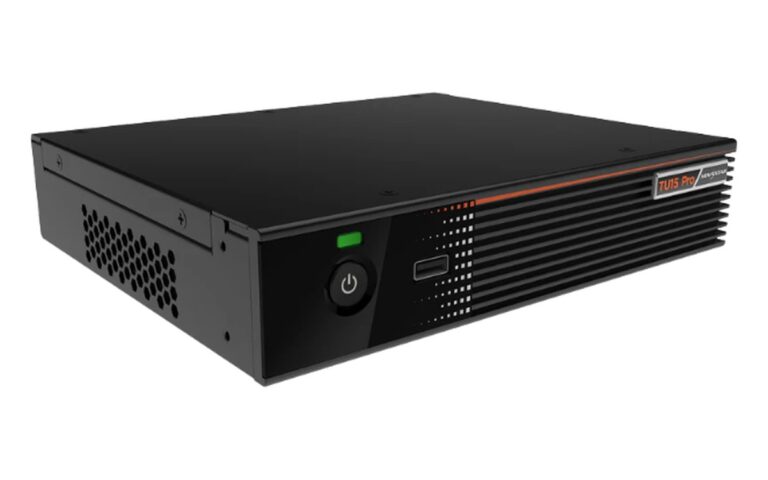
- Control system — NovaStar, Colorlight or Linsn. The controller, receiving cards and software licence are real costs, and mixing brands later is expensive.
A quotation that names none of these is not comparable with one that does. Ask for the bill of materials, not just the rate.
Driver 5: quantity, structure, freight and installation
Per-square-metre cost falls as quantity rises, because setup, programming, spare parts and packing are largely fixed. Below roughly 10 square metres, fixed costs dominate; above 50 square metres, the screen itself dominates.
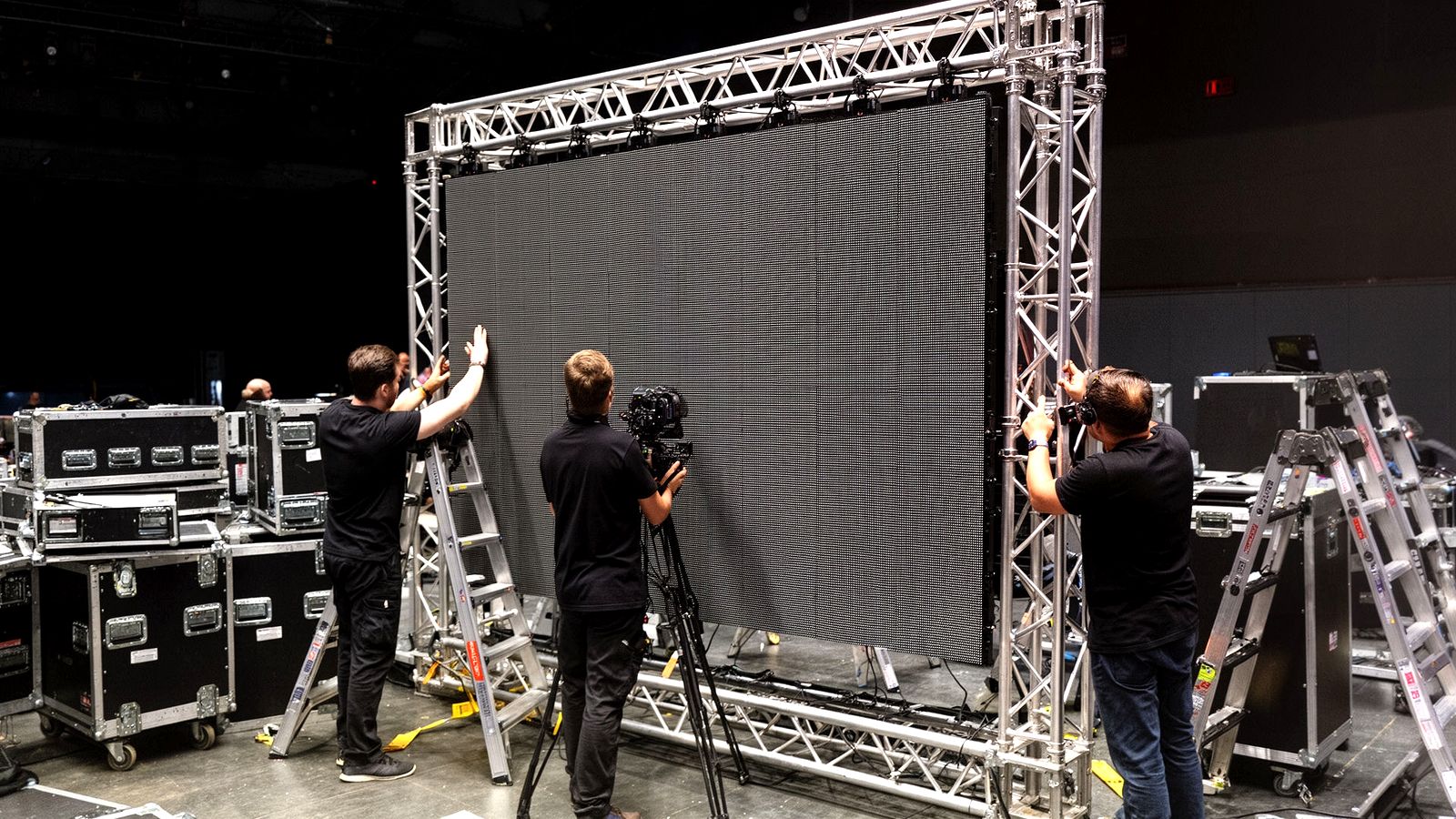
Three items sit outside the screen rate and are frequently underestimated: the steel structure, freight and installation. A 30 square metre outdoor billboard may need a steel frame costing as much as the display, plus permits, cranes and commissioning. For rental buyers, the equivalent hidden cost is flight cases, spares and crew training.
How to compare two quotes fairly
Put both quotations into the same checklist before comparing totals:
- Pixel pitch, brightness and IP rating — identical?
- Cabinet material, size and weight — identical?
- LED lamp brand, driver IC, power supply and control system — named?
- Receiving cards and power supplies per cabinet — included or extra?
- Spare parts, flight case or packing — included?
- Steel structure, installation and commissioning — included?
- Warranty length and what it covers — modules, power supplies, labour?
If a supplier cannot answer these in writing, the price difference is not a bargain — it is an unknown.
Matching configuration to application
| Application | Typical pitch | Brightness | Cabinet |
|---|---|---|---|
| Conference room, control room | P1.25–P1.86 | 600–900 nits | 600×337.5 mm die-cast |
| Church, retail interior | P2.5–P4 | 800–1,500 nits | 640×480 or 500×500 mm |
| Stage and event rental | P2.6–P4.81 | 1,000–4,500 nits | 500×500 / 500×1000 mm |
| Outdoor facade and billboard | P4–P10 | 5,000–9,500 nits | 960×960 mm |
| Stadium perimeter | P6.67–P10 | 6,500–10,000 nits | 1600×900 mm, IP68 front |
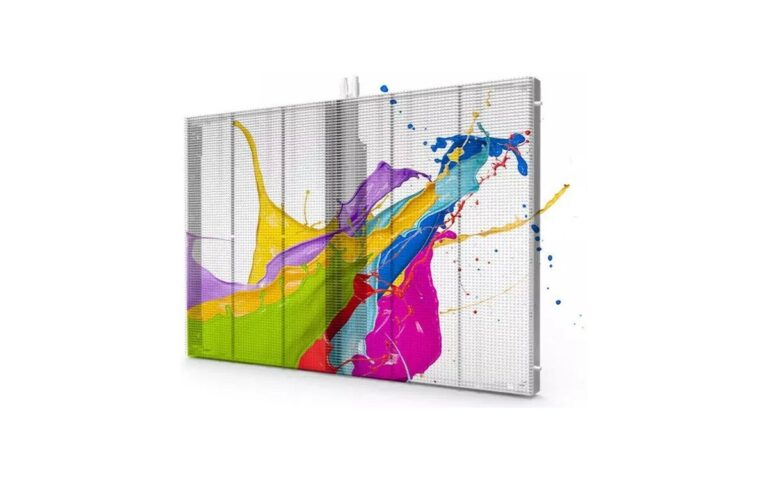
Related reading: interactive LED floor displays, transparent LED displays and LED poster displays.
Frequently asked questions
No. Outdoor screens use brighter LEDs, higher drive current, sealed cabinets and stronger power supplies. The same pitch in an outdoor build costs more than the indoor version.
Because pitch is only one line of the bill of materials. LED lamp brand, driver ICs, power supply, cabinet material, control system, spare parts and warranty all move the number.
Usually yes. Setup, programming, packing and spares are fixed costs that spread across more square metres. Steel structure and installation can offset part of that saving.
Cabinets, modules, power supplies, receiving cards, controller, cables, spare parts and export packing. Steel structure, freight, installation and taxes are often quoted separately — confirm before comparing.
Send four details: screen size, pixel pitch or viewing distance, indoor or outdoor use, and destination. With those, a supplier can quote the right configuration instead of a generic rate.
Next step
If you send your application, viewing distance, screen size and destination, we will reply with the suitable series, cabinet options and a project quotation — and tell you where a cheaper specification would work, and where it would not.
Per square metre of screen, with cabinets, control system, structure, installation and spare parts scoped separately. The LED wall price guide explains the five cost drivers and why two quotes for the same pitch can differ.
What changes the number between countries
Two buyers can receive the same per-square-metre rate and still pay very different landed costs. Before comparing quotations, put these five items on the same basis:
- Freight mode and volume. Air freight is charged on volumetric weight, so cabinets with deep flight cases are penalised; sea freight shifts the cost to minimum volume and port charges.
- Import duty and taxes. LED displays are classified under different HS codes depending on whether they are complete screens or modules, and the rate varies by country.
- Structure and installation. Steel frames, rigging, cabling and commissioning are usually excluded from a per-square-metre screen price.
- Spare parts and service. A quote that includes 2–3% spare modules and receiving cards costs more up front and less over five years.
- Currency and payment terms. USD pricing with a deposit balance split changes the effective cost when local currency moves.
Ask every supplier to quote on the same Incoterm, the same spare-parts ratio and the same warranty length. That is the only way the per-square-metre number means anything.