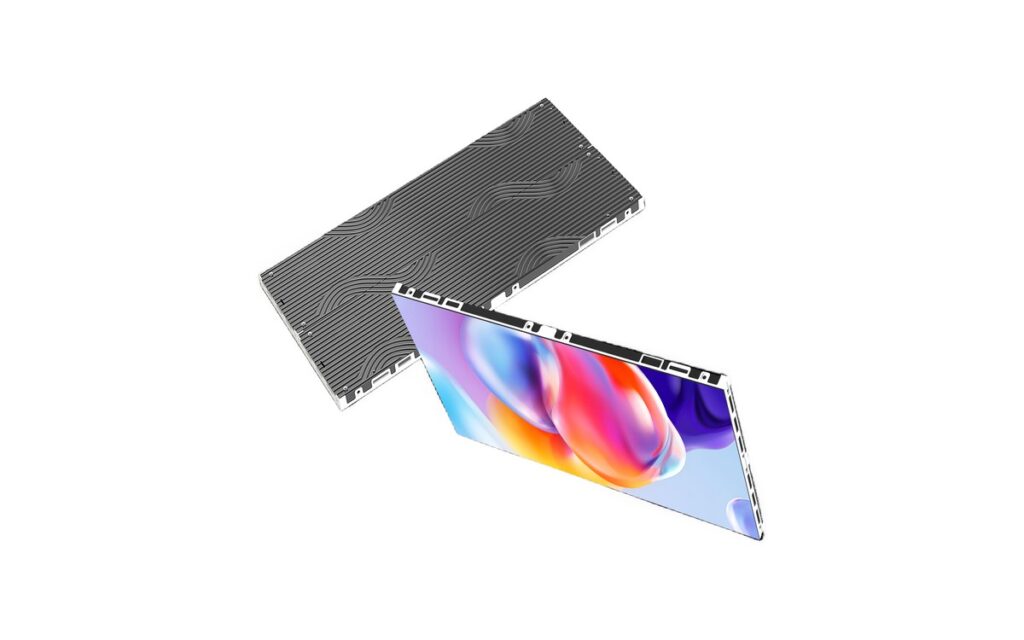
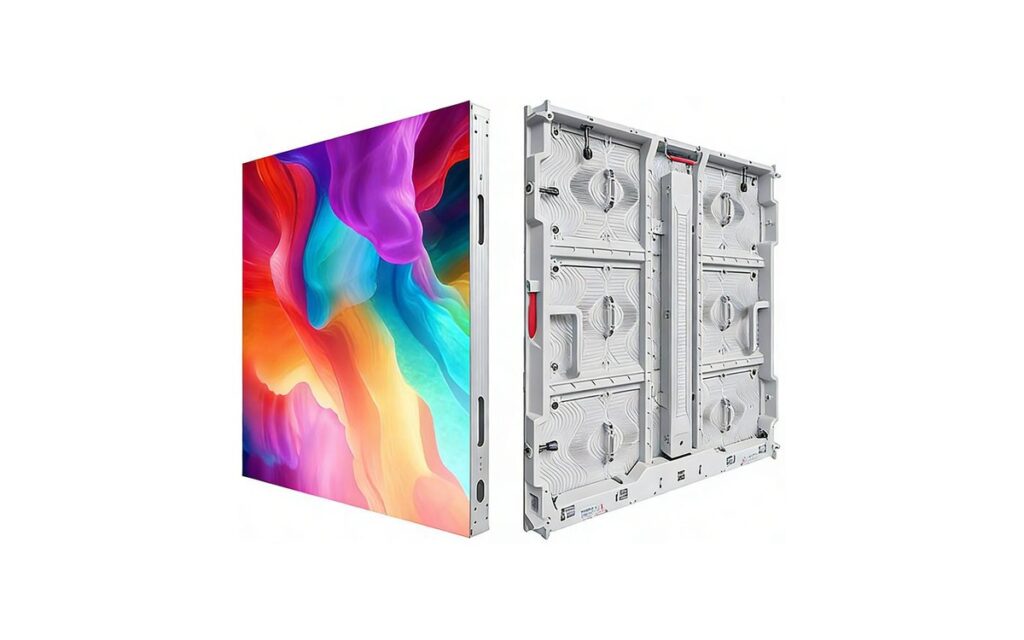
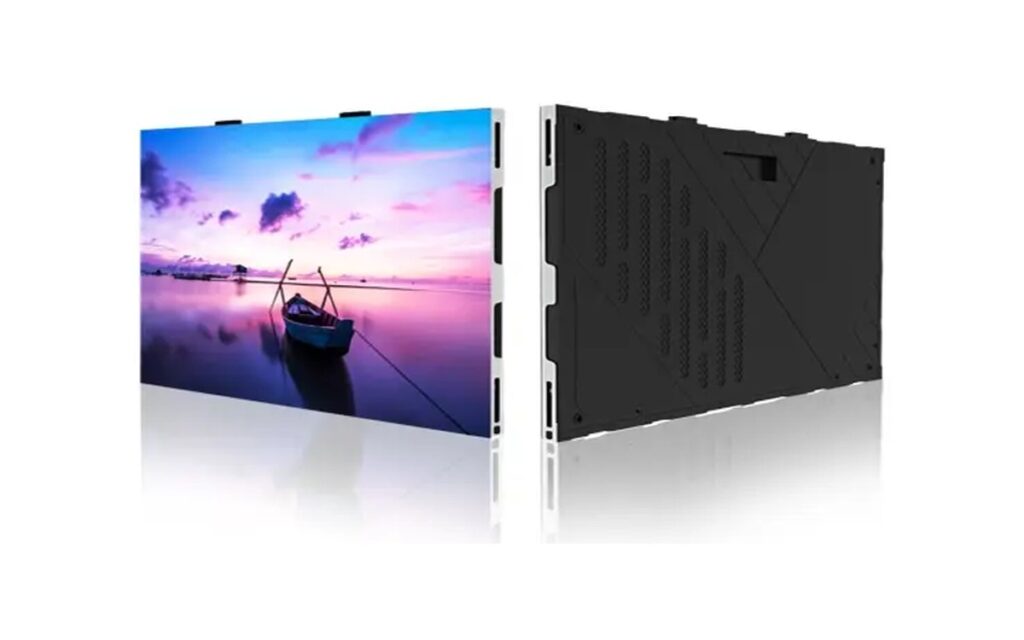
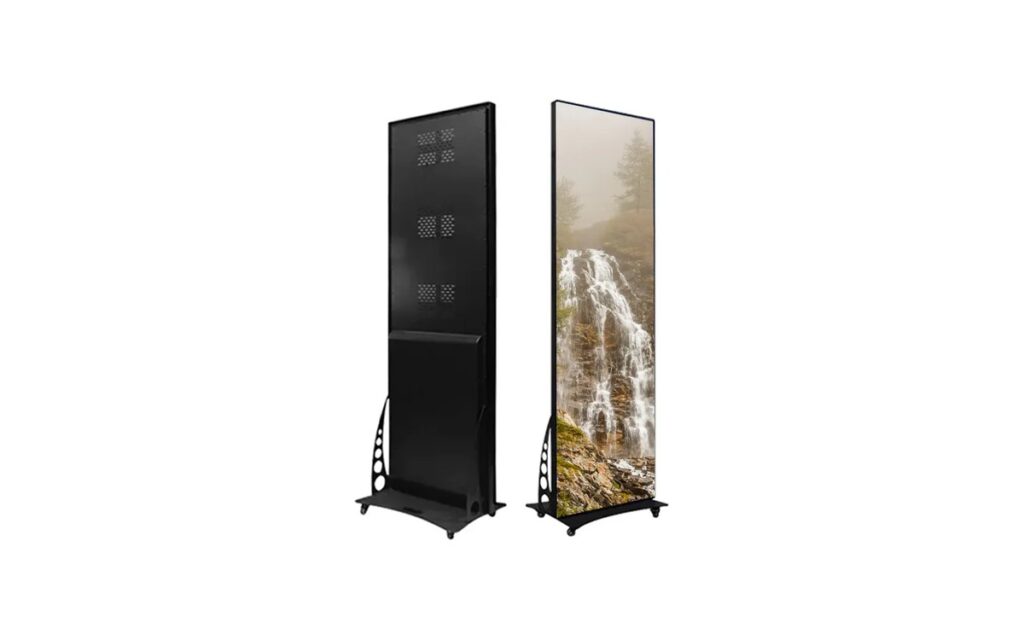

The jump from P3.91 to P2.6 costs roughly 40–60% more per square metre and adds weight, but it solves a specific problem: the front rows and the camera. If your events are filmed, or the audience sits within 4 m, P3.91 shows its structure; P2.6 does not.
What P2.6 means on a 500×500 cabinet
Pitch is the distance between LED centres. At 2.6 mm, one square metre holds about 147,000 pixels, and a 500×500 mm cabinet carries 192×192. Two cabinets side by side are 384 pixels wide; four are 768. That arithmetic decides whether your content maps 1:1 or gets scaled.
Resolution planning: the 1080p question
For a 1920×1080 canvas at P2.6 you need 4.99 × 2.81 m — call it 5.0 × 2.8 m, which is 10 columns × 5.6 rows of cabinets. Since cabinets come in 500 mm increments, the practical build is 5.0 × 3.0 m (1920×1152), slightly taller than 16:9. Content is then cropped or letterboxed, so agree the canvas with the client before ordering.
| Wall size | Pixels at P2.6 | Content fit |
|---|---|---|
| 4 × 2.5 m | 1,536 × 960 | Between 720p and 1080p |
| 5 × 3 m | 1,920 × 1,152 | 1080p with extra height |
| 6 × 3.5 m | 2,304 × 1,344 | Above 1080p, camera-friendly |
| 8 × 4.5 m | 3,072 × 1,728 | 2K content, large venue |
Brightness, refresh and camera
Indoor P2.6 cabinets normally run 800–1,200 nits, which is enough under stage lighting and controllable for broadcast. Refresh matters more: 3,840 Hz avoids most banding, 7,680 Hz is specified when the screen appears in close-up or slow-motion. Ask for a camera test at the shutter speed the production uses — a datasheet number is not a test.
Weight, rigging and cabinet format
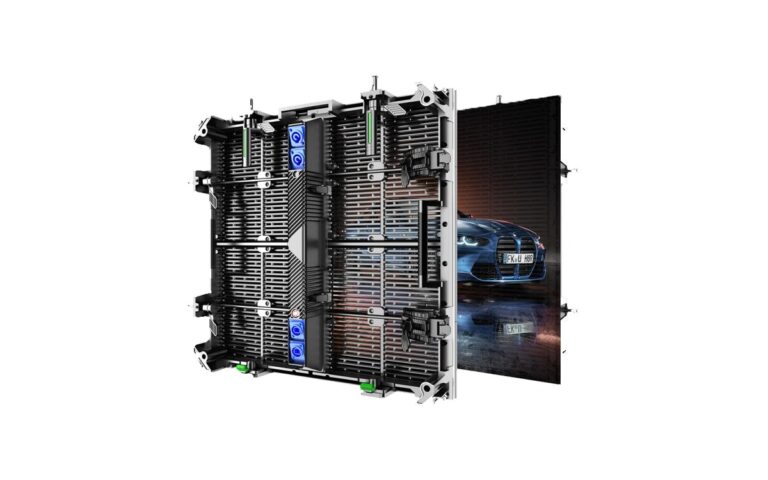
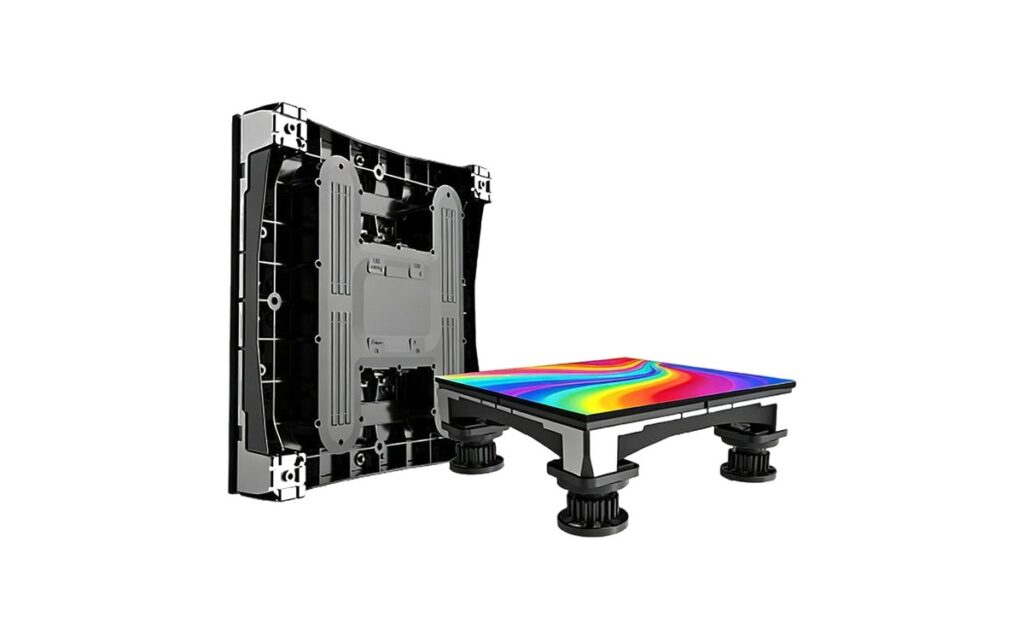
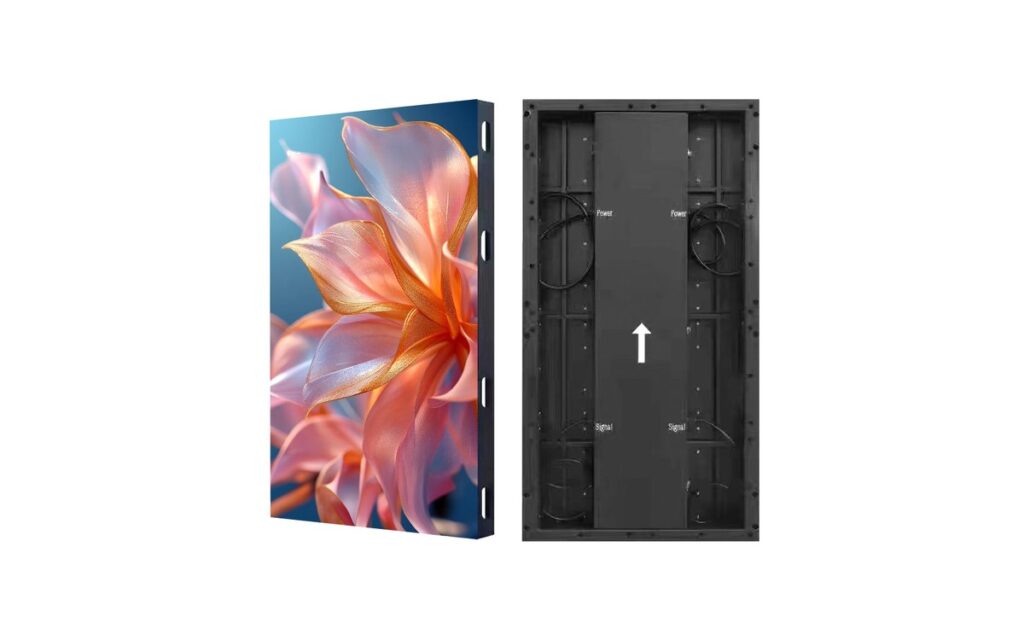
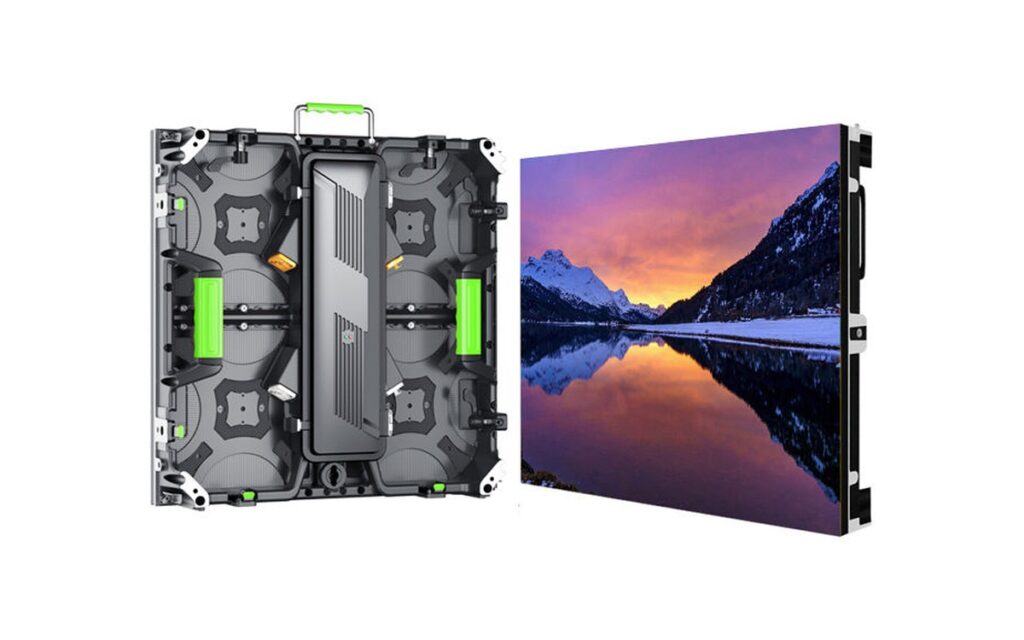
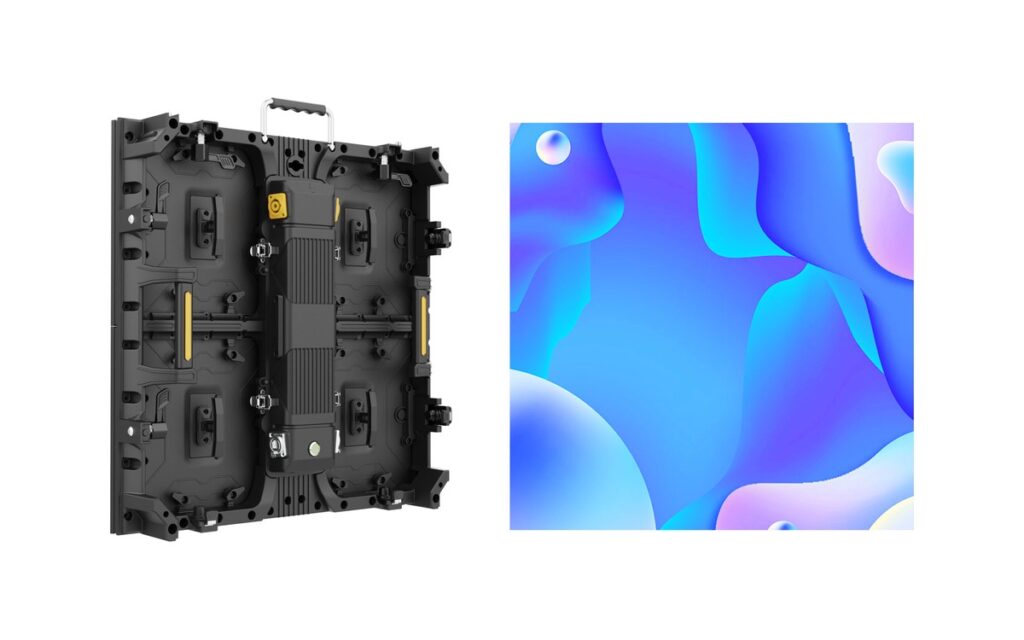
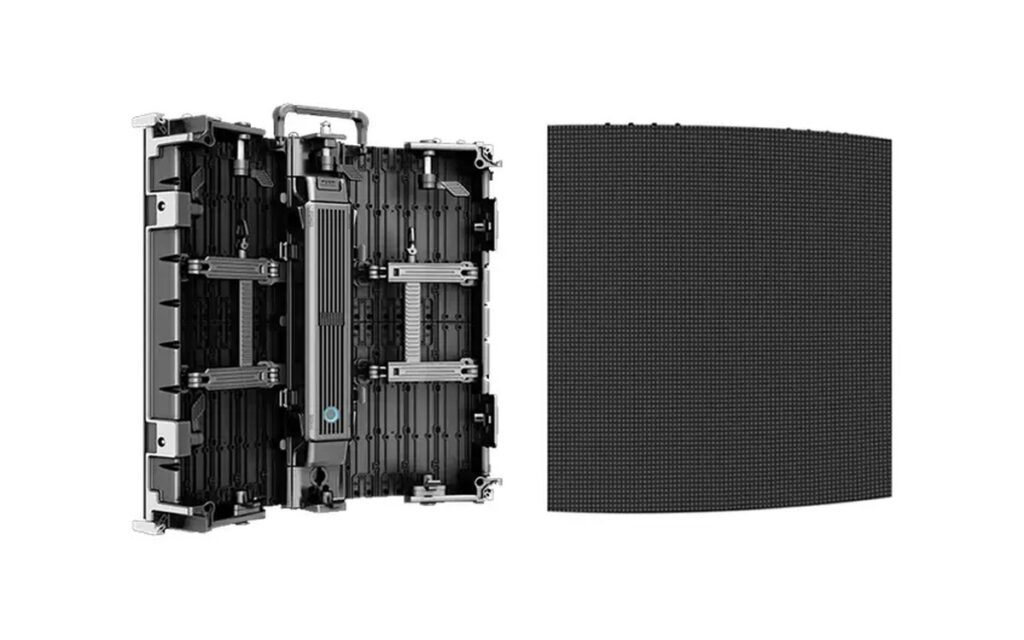
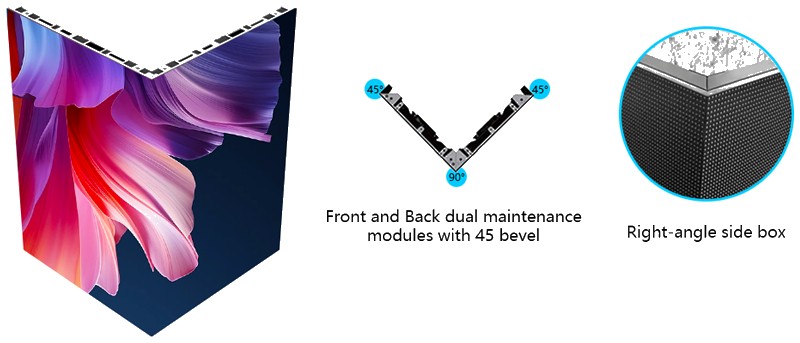
P2.6 cabinets are denser than P3.91 and typically weigh 8.5–9 kg in a 500×500 format, slightly more than the coarser version. For a 30 m² wall that is about 120 kg extra before rigging. Curved locks and 90° corners are available but must be ordered with the batch; they are not retrofitted.
When P2.6 is overkill
If the nearest viewer is 6 m away and the content is bold stage graphics, P3.91 will look the same to the audience and cost less. P2.6 earns its price when the camera is close, the audience is near, or the content contains text and product detail. Buying finer pitch “to be safe” is a common way to overspend.
Power and data planning
A P2.6 wall draws more per square metre than P3.91 because there are more LEDs: budget roughly 550–750 W/m² at peak and about a third of that in average use. A 15 m² wall is therefore 8–11 kW at peak, which usually means a dedicated circuit rather than a shared ring main. Confirm the venue’s supply before the quote, not after the cabinets arrive.
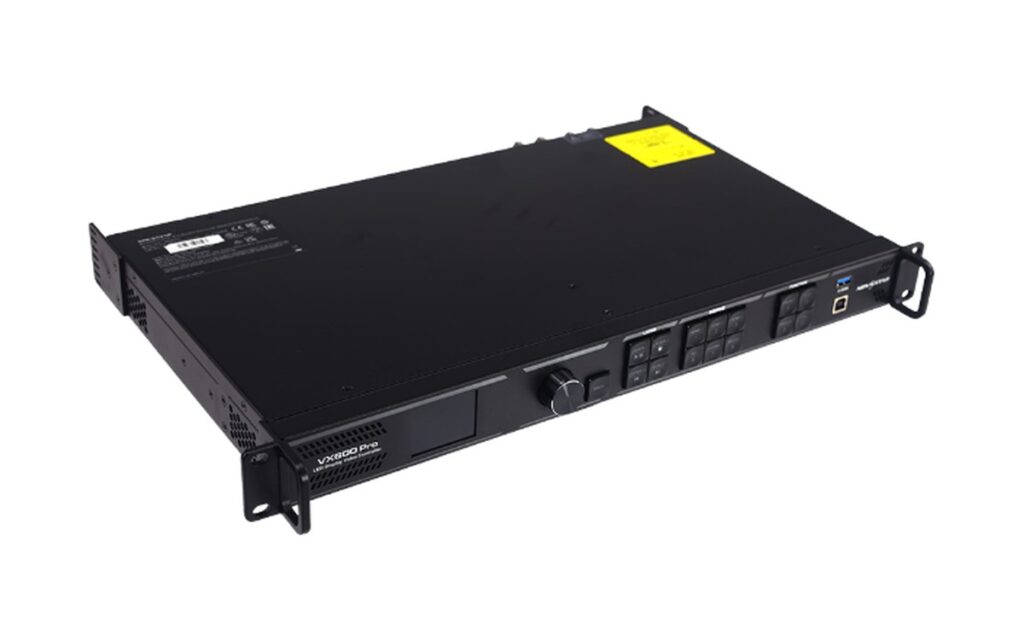
Data topology tightens at higher refresh. At 7,680 Hz the number of cabinets per receiving-card run drops, so a large P2.6 wall may need more sending cards or a different layout. Ask for a signal plan with the quote and check that the control system supports the resolution at the planned refresh.
P2.6 or P1.95: where to stop
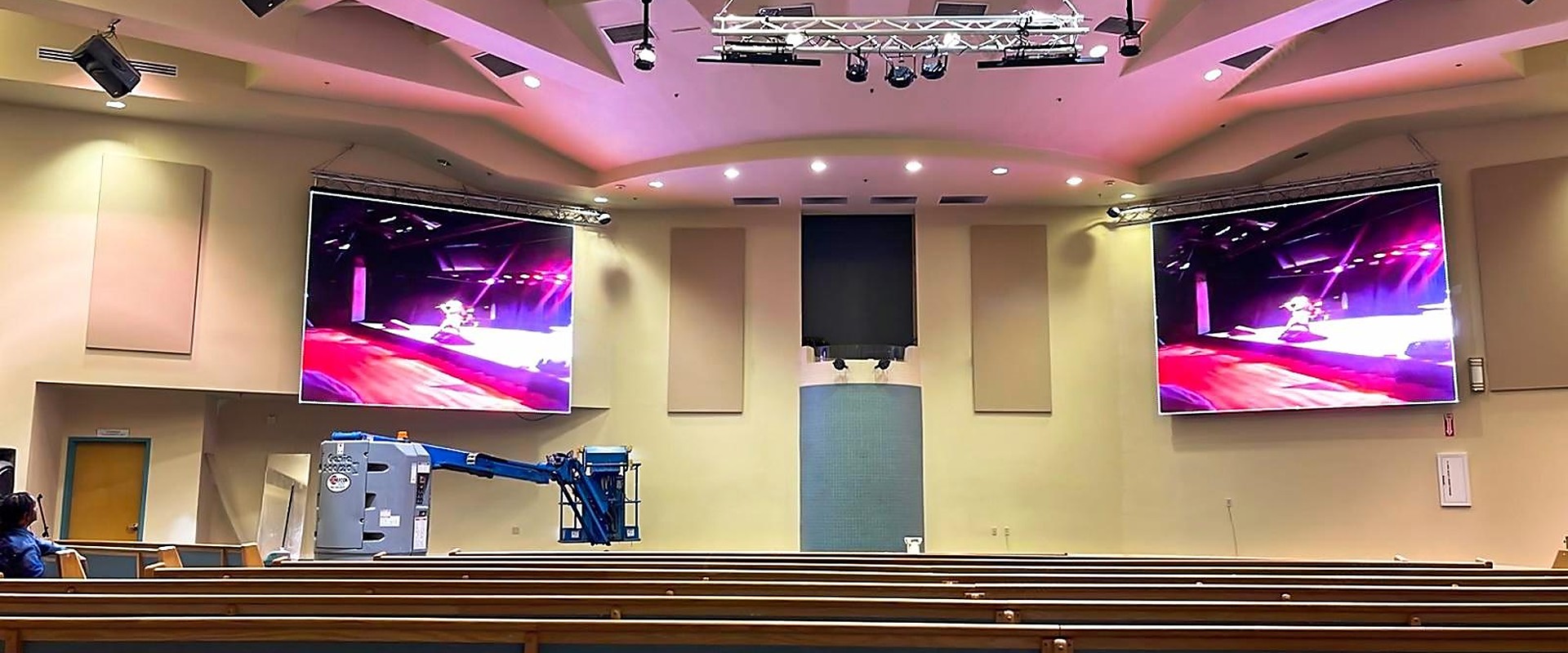
If the audience sits within 3 m, or the content includes spreadsheets, product catalogues or detailed dashboards, P1.95 is the next step and P2.6 will still show pixel structure. For stages and churches, P2.6 is usually the practical limit — finer pitch costs rise quickly and the weight per square metre climbs. Decide by the closest viewer and the smallest text the content requires, not by a preference for “sharper”.
FAQ
192×192 pixels, about 147,000 per square metre.
About 5.0 × 2.8 m. In 500 mm cabinets the practical build is 5.0 × 3.0 m, slightly taller than 16:9.
Only in an outdoor cabinet with IP65 and 4,500+ nits. The pitch is fine; the enclosure and brightness are the limiting factors.
Roughly 0.5–1 kg per 500×500 cabinet, so a 30 m² wall gains about 100–150 kg.
For broadcast close-ups and slow-motion, yes. For audience-only viewing, 3,840 Hz is normally enough.
Compare the Rental-H 500×500 series, the rental range, or the rental and stage solutions.