Outdoor projects are decided by three numbers: brightness for the sun, IP rating for the weather, and cabinet size for the steel structure. The 960×960 format is popular because it balances all three — big enough to cut steel and installation cost, small enough for two people to handle.
Why 960×960 became the outdoor standard
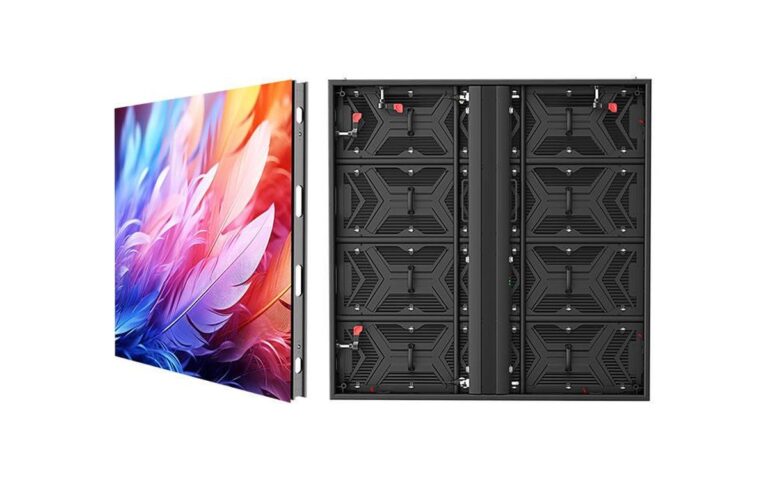
One cabinet covers almost exactly one square metre, so area calculations, steel drawings and freight estimates all become simpler. Compared with 640×640, a 960×960 wall needs about 44% fewer cabinets for the same area — fewer seams, fewer power connections and faster installation at height.
Pitch options and what they are for
P4–P5 suits close roadside and building entrances where pedestrians pass within 5–8 m. P6–P8 is the workhorse for billboards viewed from 10–20 m. P10 is used for very large roadside and stadium perimeter screens where the nearest viewer is 20 m or more. Higher pitch means fewer LEDs per square metre, which lowers cost and power per area but reduces close-up detail.
| Pitch | Pixels per cabinet | Typical viewing | Brightness |
|---|---|---|---|
| P4 | 240×240 | 5–10 m | 5,500–6,000 nits |
| P6.67 | 144×144 | 10–15 m | 5,500–6,500 nits |
| P8 | 120×120 | 15–20 m | 5,500–8,000 nits |
| P10 | 96×96 | 20 m+ | 8,000 nits |
Brightness, IP and heat
Roadside billboards need 6,000–8,000 nits to stay readable in direct sun; a facade under shade can work at 5,000. IP65 covers rain and water jets, but it does not stop condensation inside the cabinet — ventilation design and breathing valves matter in coastal and desert climates. Ask how the cabinet handles heat: passive aluminium with good thermal path is common, fan-assisted cooling appears on high-brightness builds.
Structure, service and weight
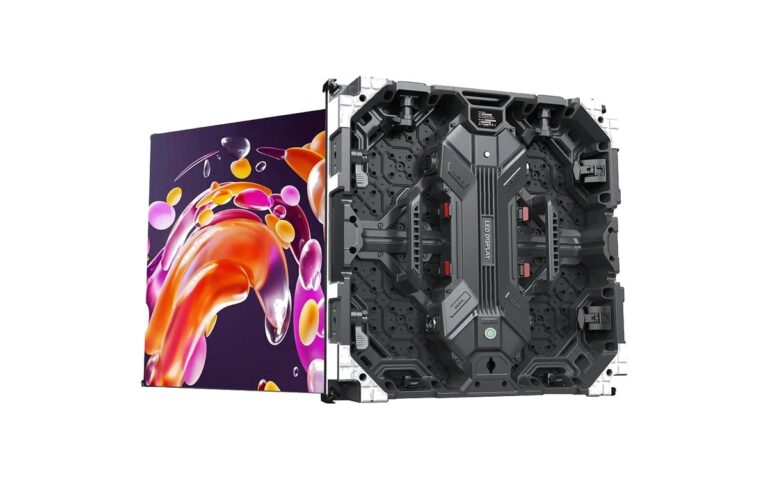
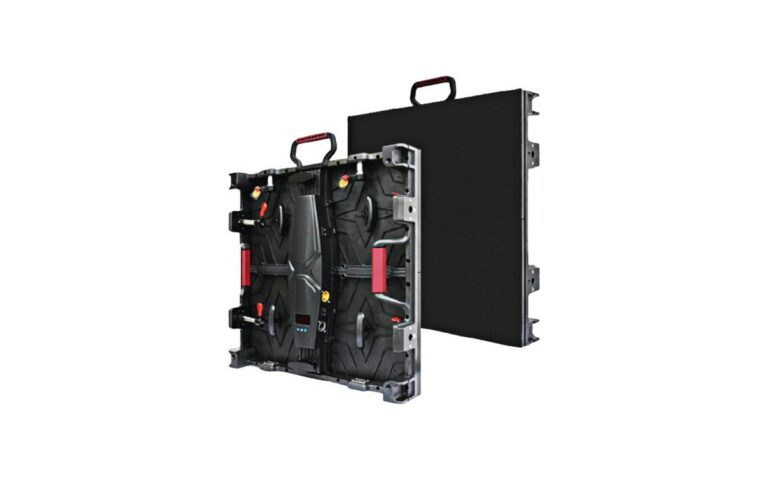
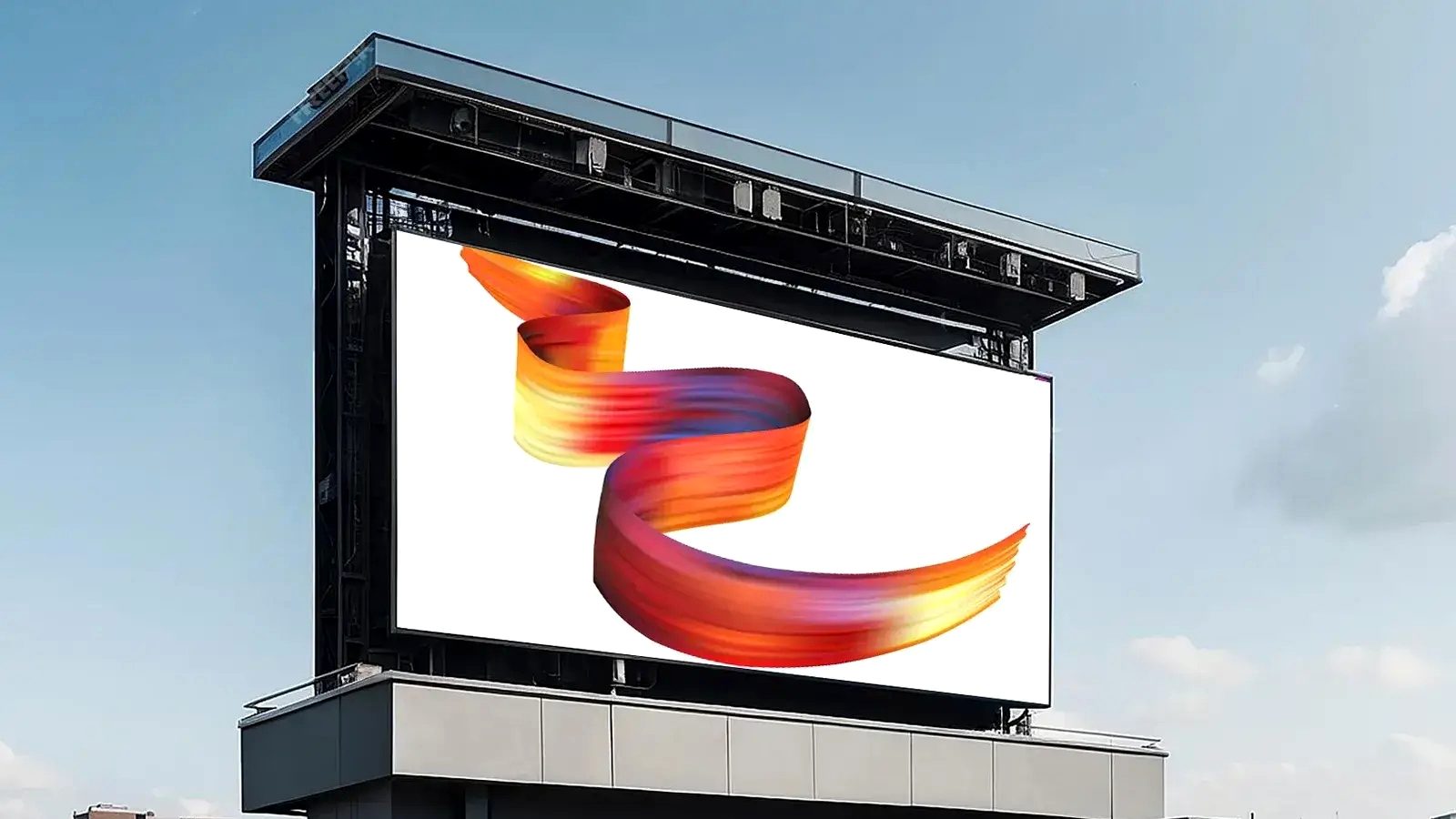
A 960×960 cabinet weighs 25–30 kg, so a 30 m² billboard is roughly 30 cabinets and about 800 kg of screen before steel. Front and rear service access changes the steel design: rear service needs walkway space, front service allows a tighter structure against a wall. Decide this before the steel is drawn, because retrofitting is expensive.
Steel, wind load and foundation
An outdoor cabinet is only as good as the structure behind it. A 30 m² billboard presents roughly 30 m² of sail area, and wind load at 30 m/s is measured in tonnes. The steel design, anchor pattern and foundation belong to a structural engineer, not the screen supplier — but the cabinet’s weight, fixing points and service access must be given to that engineer before the drawing is finalised.
For facade installations, check how the cabinet fixes to the wall: individual brackets, a shared rail system or a frame. A rail system speeds alignment; individual brackets allow more adjustment on an uneven wall. Neither works if the wall itself cannot take the pull-out load, which is why a site survey comes before the quote on any large facade job.
Power, data and maintenance on large facades
A 100 m² P6 screen can draw 60–80 kW at peak. That is a dedicated supply, not a spare socket, and it usually needs its own distribution board, surge protection and a documented shutdown procedure. Data runs need to respect distance limits: copper beyond about 100 m becomes unreliable, so fibre and a media converter are often part of the design on tall buildings.
Maintenance access decides the lifetime cost. Rear-service screens need walkways or a catwalk; front-service screens can be reached from outside with a lift or rope access. On a coastal site, plan an annual inspection of seals, fans and connectors — corrosion starts at the joints long before the LEDs fail.
Common billboard sizes and cabinet counts
Outdoor briefs usually arrive as a structure drawing. Converting it to cabinets early avoids surprises in steel and freight.
| Screen size | 960×960 cabinets | Approx. screen weight |
|---|---|---|
| 6 × 3 m | 18 | 450–540 kg |
| 9 × 4 m | 36 | 900–1,080 kg |
| 12 × 6 m | 72 | 1,800–2,160 kg |
| 18 × 8 m | 144 | 3,600–4,320 kg |
The weight column excludes steel, walkways and cladding. On a rooftop or an old facade, that number decides whether a survey is needed before the quote — and it usually is.
Shipping volume and packing
Outdoor cabinets pack two to four per case depending on the case design. A 72-cabinet billboard is roughly 18–36 cases, or 15–25 cubic metres before steel. Sea freight is normal for this volume; air freight is only justified for urgent spares. Ask for the packed volume in the quote so the forwarder can price it properly.
FAQ
Fewer cabinets per square metre, fewer seams and faster installation. The trade-off is weight per cabinet and the need for two-person handling or a lift.
P6–P8 for most roadsides viewed from 10–20 m, P10 for very large screens seen from further away, P4–P5 only when viewers pass close.
IP65 handles rain and wash-down, but salt air and condensation need extra attention: sealed connectors, breathing valves and a maintenance plan.
Rear service is easier where there is walkway space; front service suits facades where the screen sits close to a wall or above traffic.
Typically 25–30 kg depending on pitch, brightness and cooling. Confirm against the datasheet before designing the steel.
Compare the Outdoor-FR 960×960 series, the IP66 Outdoor-FS PRO, or the full outdoor fixed range.
Per square metre of screen, with cabinets, control system, structure, installation and spare parts scoped separately. The LED wall price guide explains the five cost drivers and why two quotes for the same pitch can differ.