






























Rental & Stage LED Display Solutions
Create impactful stage visuals with modular rental LED displays for concerts, exhibitions, corporate events and touring productions.
- Rental LED panels — indoor & outdoor, rig-ready
- Fast-rig cabinets with flight cases for touring
- Curved, circular & custom-shaped builds
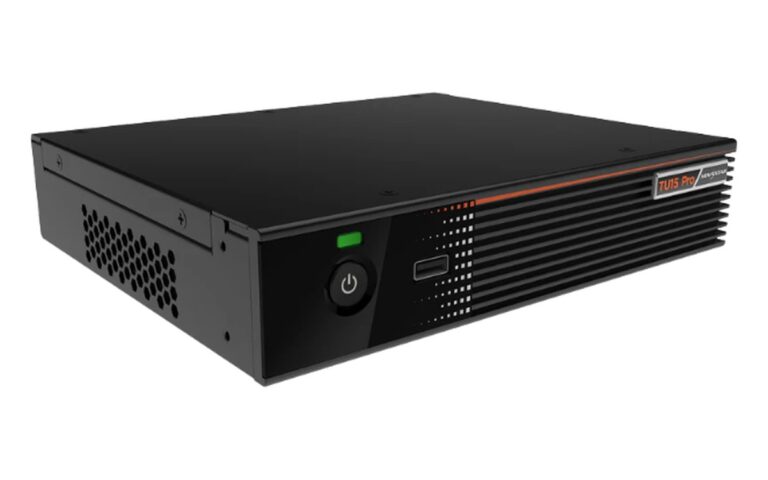
- Processors, fiber & cabling — complete signal chain
Typical Rental & Stage Project Challenges
These are the key technical factors to confirm before selecting a rental LED system:
- Fast setup and dismantling for frequent events and tight schedules
- Curved, corner and hanging configurations for different venues
- High refresh performance for cameras and live production
- Reliable signal distribution across large LED walls and long cable runs
Rental LED Series at a Glance
Match the cabinet to the show — indoor, outdoor or flexible builds, with the signal chain supplied alongside.
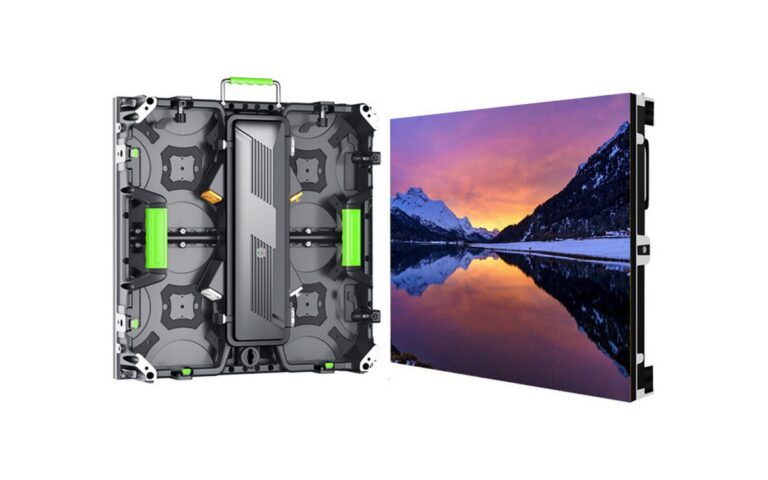
Rental-J Series
Indoor concerts, conferences, exhibitions, corporate events and venues with controlled ambient conditions
View details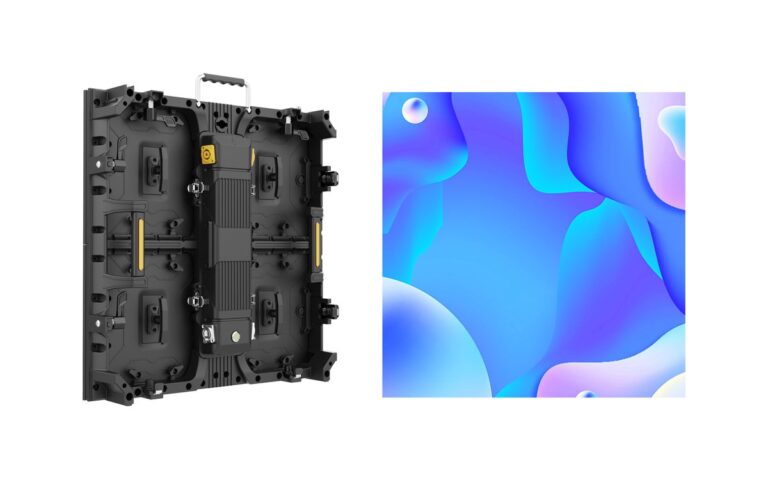
Rental-O Series
Outdoor festivals, touring productions, public events and corporate programs held in open environments
View details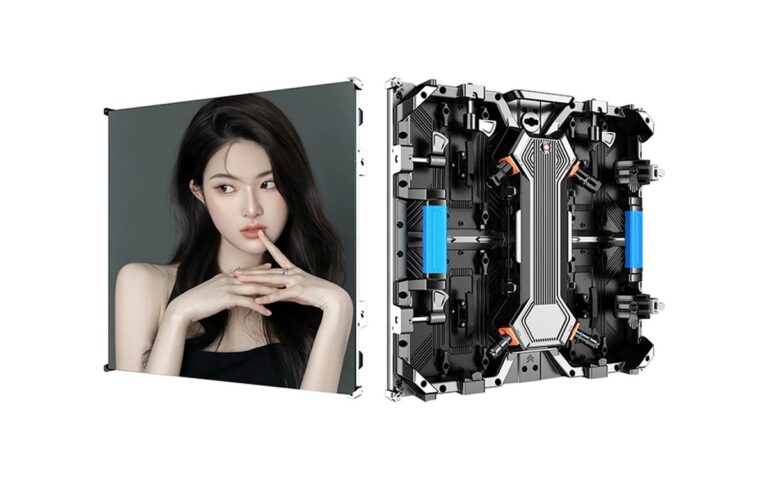
Rental-K Series
Outdoor live shows, festivals, sports-related events, touring stages and contractor-managed installations
View details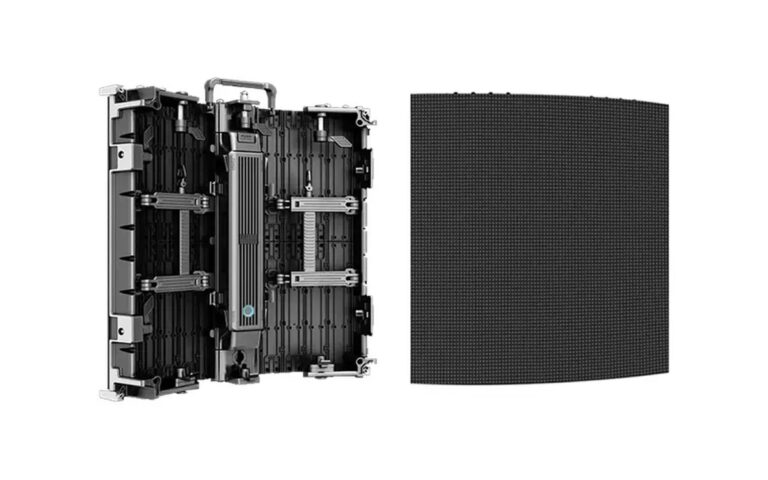
Rental-RX Series
Creative stage designs, curved backdrops, event structures, exhibition features and installations with irregular surfaces
View details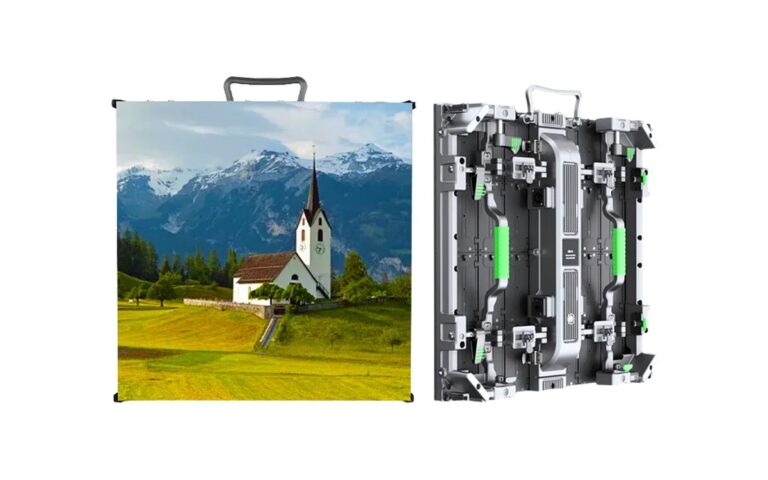
Rental-FX Series
Touring shows, branded event areas, stage accents, curved displays and compact production designs
View detailsQuick comparison
| Series | Best For | Key Consideration |
|---|---|---|
| Rental-J | Indoor events and exhibitions | Lightweight indoor rental setup |
| Rental-O | Outdoor events and festivals | Outdoor protection and high-brightness use |
| Rental-K | Outdoor stages with project-specific cabinet and rigging requirements | Confirm cabinet size, rigging method and service access |
| Rental-RX / FX | Curved and creative stages | Radius, structure and content mapping need confirmation |
Which Rental LED Display Is Right for Your Event?
Indoor rental LED displays are suitable for conferences, exhibitions and controlled venues. Outdoor rental LED displays are designed for festivals and open-air events, while flexible rental LED modules support curved and creative stage layouts. The final configuration depends on screen size, viewing distance, installation method, brightness requirements and signal distance.
Stage LED wall sizing and cabinet counts
Rental walls are built in whole cabinets. With 500×500 mm cabinets, a 6×3 m wall needs 12 columns × 6 rows = 72 cabinets; an 8×4 m wall needs 16 × 8 = 128. Weight follows at roughly 8.5–9 kg per indoor cabinet, so the rigging plan must be agreed before the wall size is fixed. Curved and 90° corner builds are ordered with the batch, not added later. Concert LED screens usually combine a main wall with side screens and an LED backdrop screen behind the band, all fed from one processor.
| Wall size | Cabinets (500×500) | Approx. weight | Typical use |
|---|---|---|---|
| 6×3 m | 72 | 610–650 kg | Club, church, conference |
| 8×4 m | 128 | 1,090–1,150 kg | Mid-size event, touring |
| 12×5 m | 240 | 2,040–2,160 kg | Large concert, festival |
Rental LED Project Planning Checklist
-
Confirm the venue and installation environment
Indoor and outdoor applications have different requirements for enclosure design, operating conditions and handling.
-
Define screen size, viewing distance and content source
Pixel pitch should be considered together with viewing distance, content detail and camera use; closer audiences and detailed content generally require finer display resolution, subject to the project budget and datasheet.
-
Select cabinet type and pixel pitch
Choose the cabinet type according to the installation environment, expected viewing distance and screen layout.
For touring work, review fast-rigging methods, cabinet alignment, service access and replacement procedures before ordering. Cabinet weight, dimensions, stacking limits, flight cases, loading routes and crew handling affect transport planning.
-
Confirm hanging or ground-support method
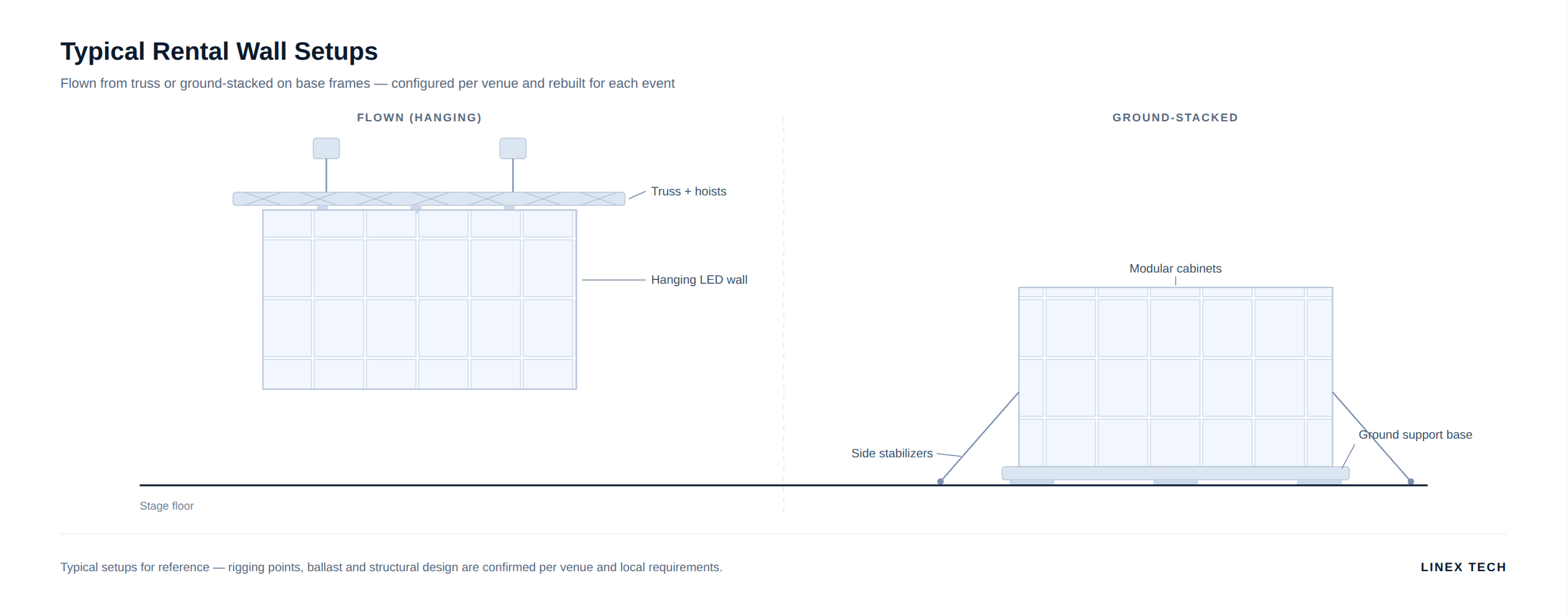
Decide early whether the screen will be flown or ground-supported. The choice depends on venue structure, screen size, wind exposure, audience sightlines, local working rules and available rigging equipment.
Structural calculations, load limits and approval requirements should be confirmed by the responsible contractor or engineer. Ground-supported systems still require a stable base, suitable ballast where needed and controlled access around the structure.
A rental system should also be checked for compatibility with the planned frame, hanging structure, ground support and control equipment.
-
Plan controller, fiber, power distribution and spare parts
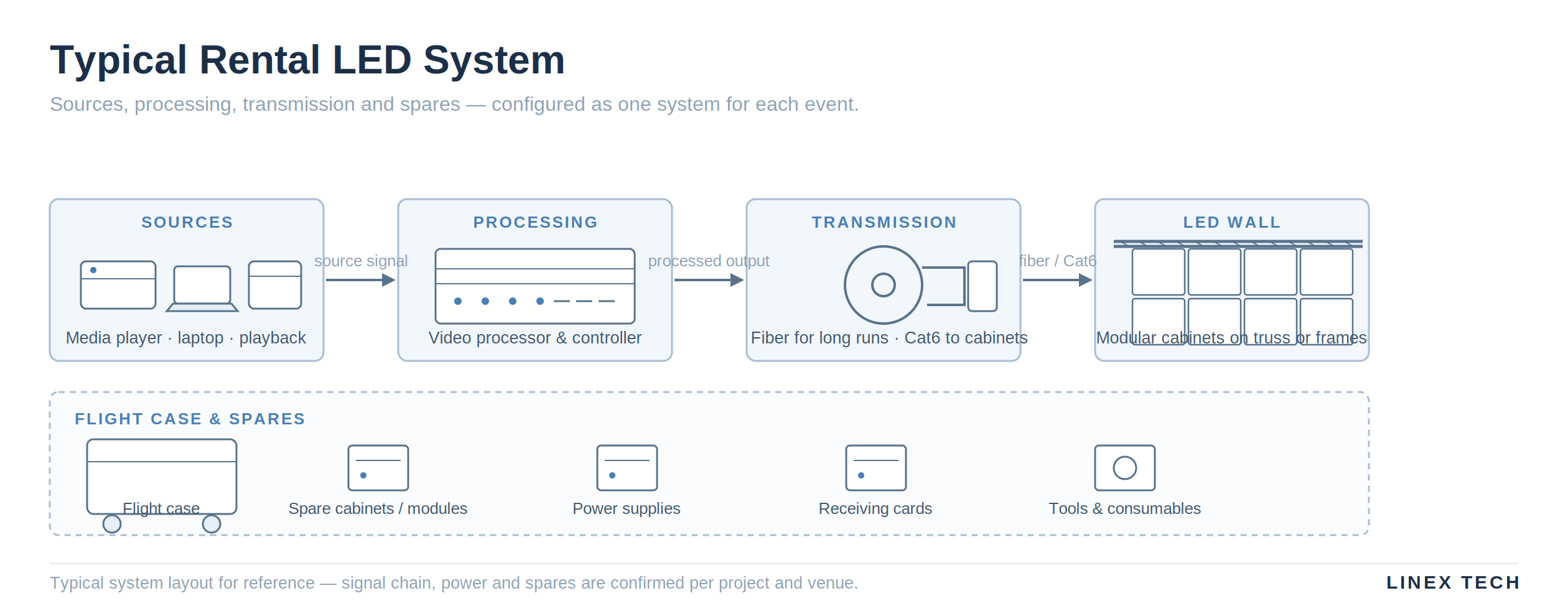
Power distribution should be planned from the cabinet layout, local supply and event operating conditions. Keep signal paths organized from the media source through processors, fiber equipment and display cabling.
Confirm how modules, power supplies and receiving cards can be accessed on site.
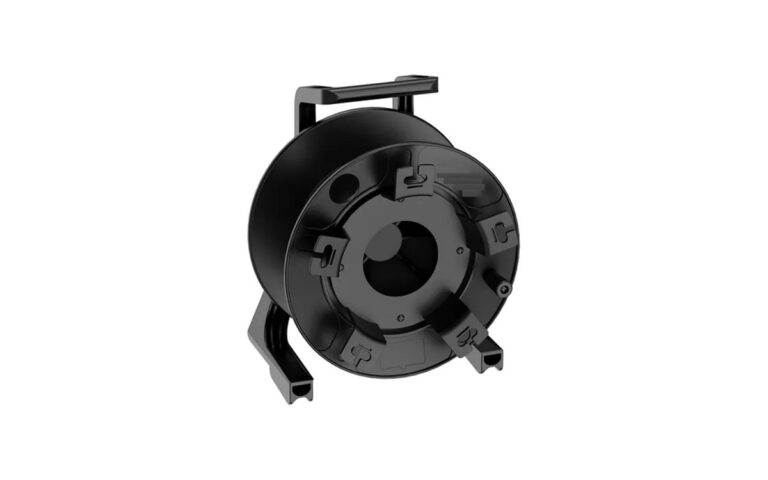
Touring productions should carry suitable spare modules, power supplies, receiving cards, cables and control equipment, with quantities based on screen size, route length, service capability and replacement procedures.
Recommended System Configurations
Typical stage LED wall setups we configure and supply as complete systems — rental cabinets together with control, signal and accessories.
Indoor Conference & Exhibition Stage
Rental-J Series + video controller + standard data cabling
View Related ProductsOutdoor Festival & Touring Stage
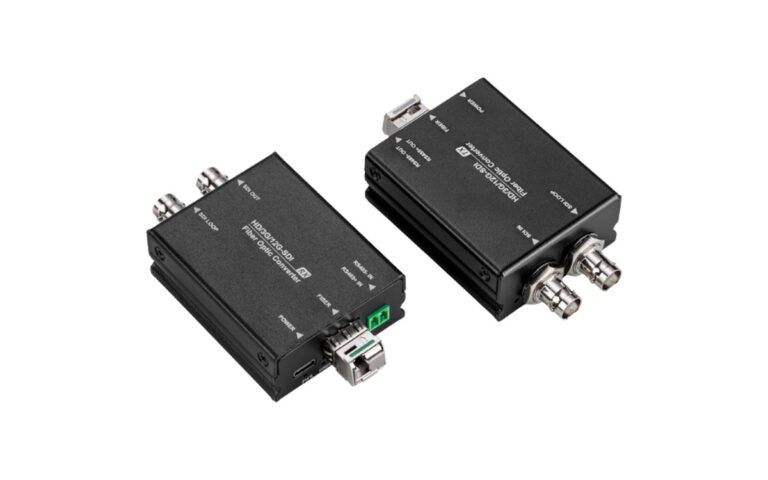
Rental-O or Rental-K Series + fiber transmission + weather-ready accessories
View Related ProductsCurved & Creative Stage
Rental-RX / FX Series + custom frame + content workflow review
View Related Products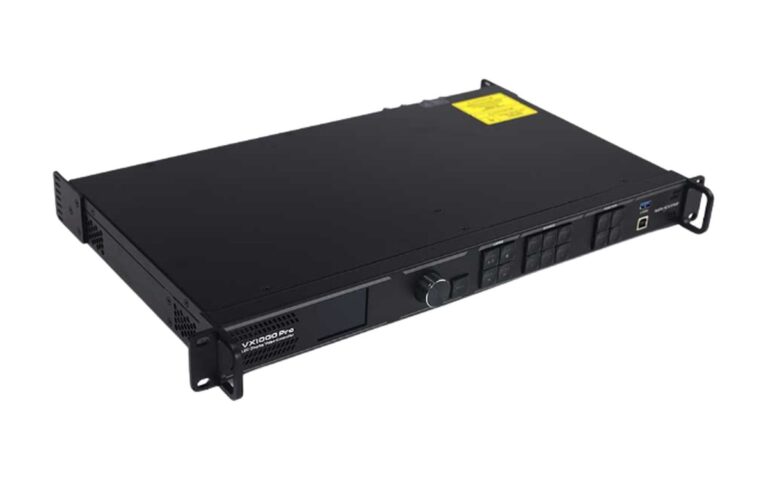
How to Select Your Rental Configuration
Configuration follows the venue and the show — not a fixed formula. This is what we review with you before recommending cabinets and pixel pitch.
| Project Factor | What We Consider |
|---|---|
| Installation environment | Indoor, outdoor, semi-outdoor or temporary installation |
| Viewing distance | Determines the suitable pixel pitch |
| Screen size and aspect ratio | Defines cabinet quantity and layout |
| Installation method | Hanging, ground stacking, wall mounting or freestanding |
| Content source | Live camera, media server, PC, signage player or video processor |
| Service access | Front or rear maintenance based on site conditions |
Typical recommendations are a starting point only. The final configuration is confirmed against viewing distance, screen size, brightness requirements and budget.
Rental System Capabilities
- Fast-rig cabinets with quick-lock mechanics
- Curved, corner and custom-shaped builds
- Hanging, stacking and ground-support compatible
- High refresh rate for camera capture and broadcast
- Complete signal chain — processors, fiber and data cabling
- Flight cases and spare parts supply for event teams
Application References
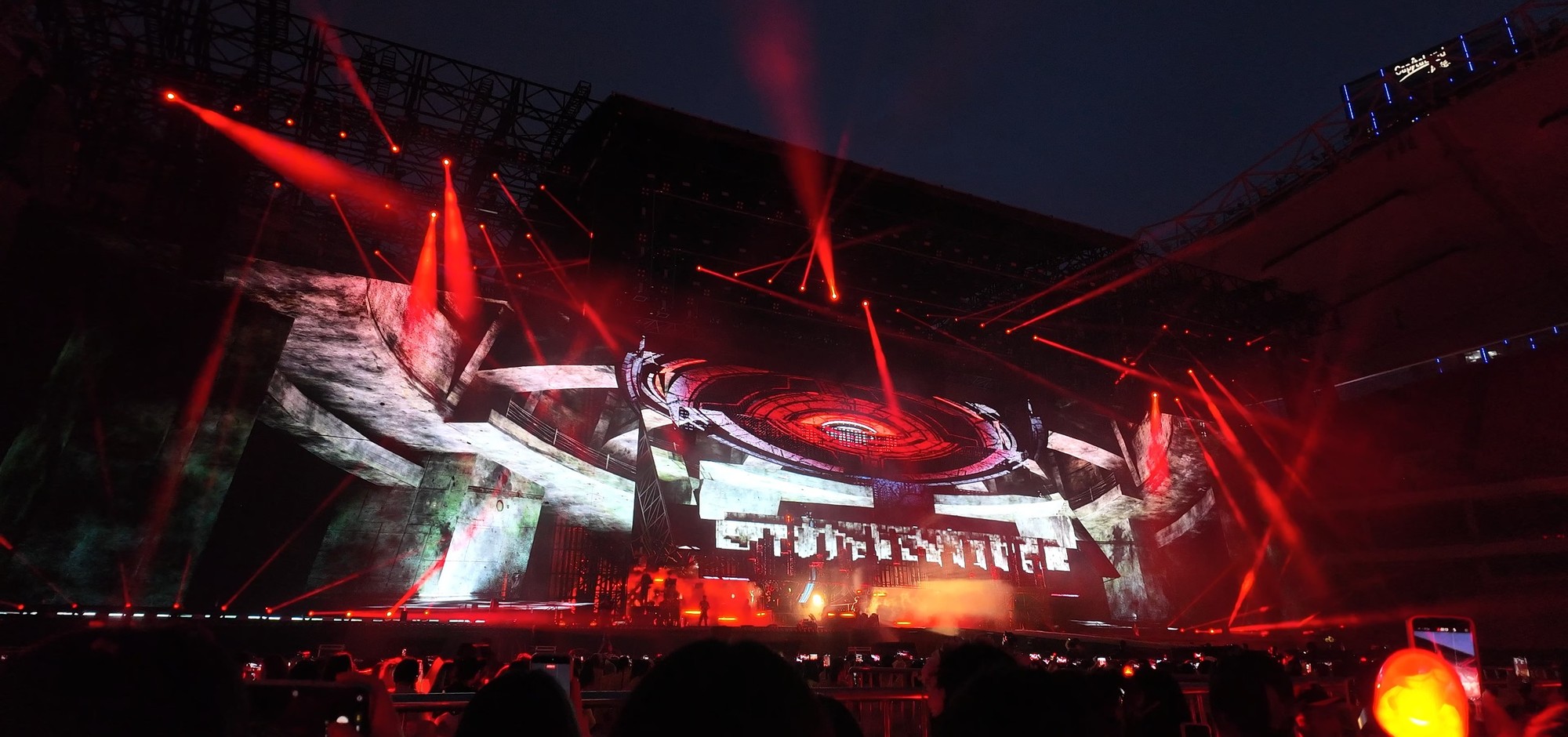
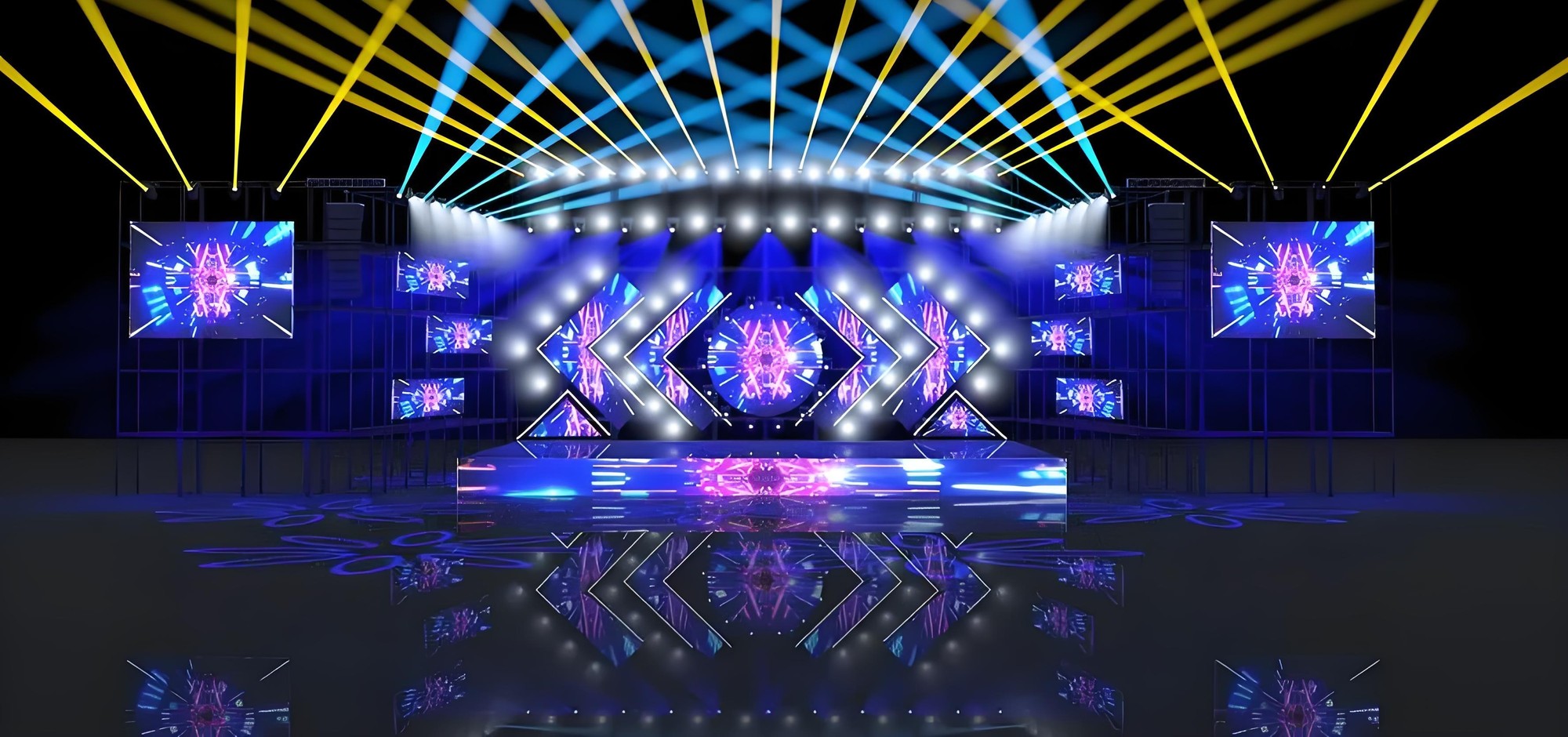
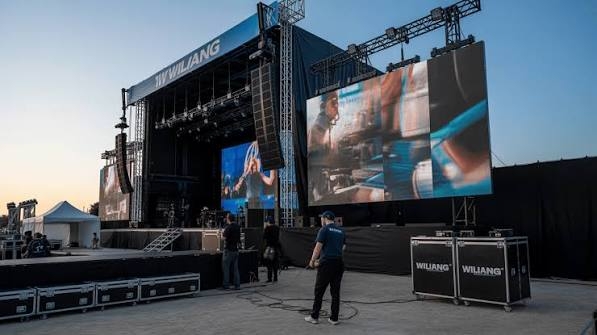
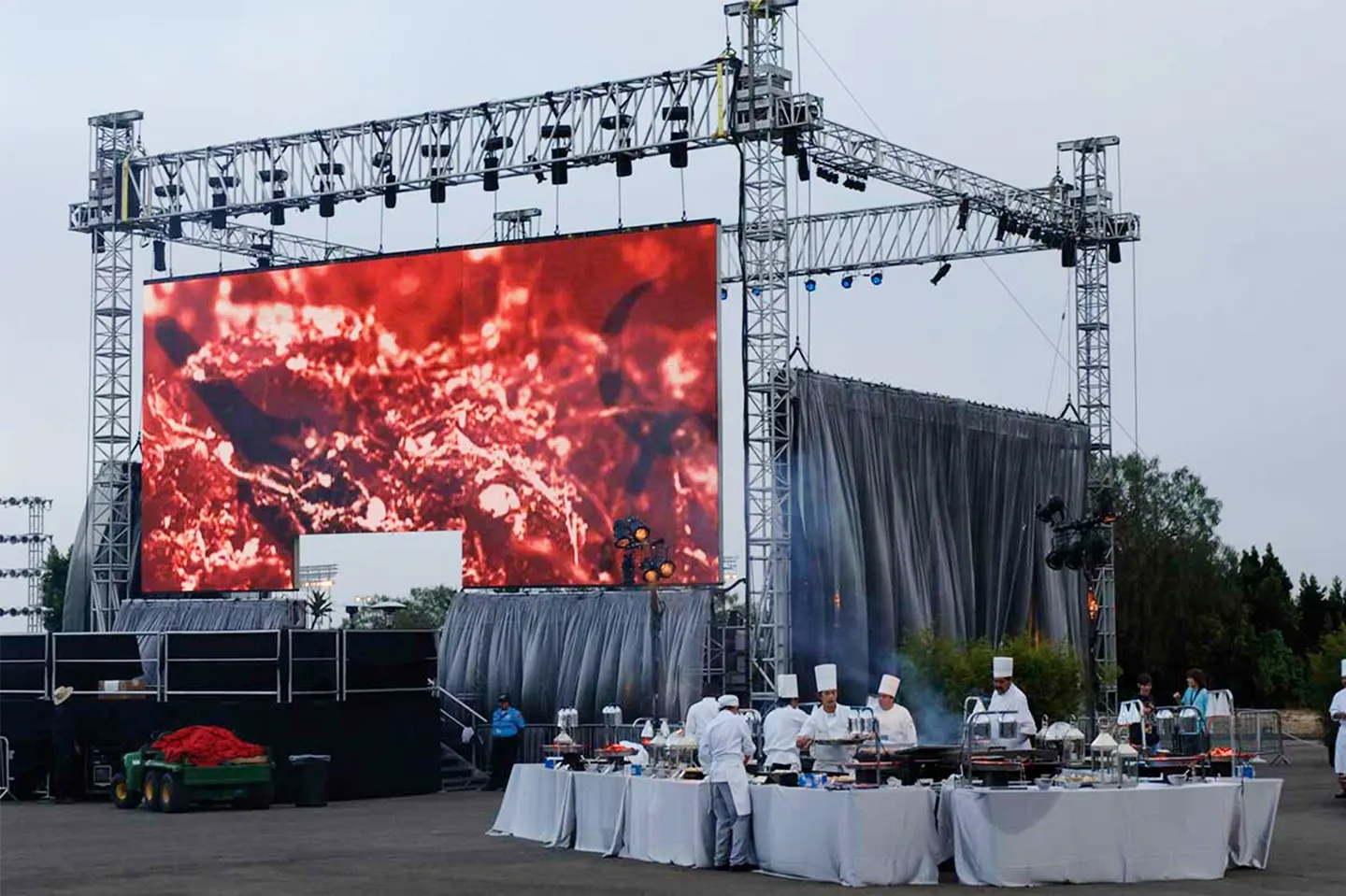
Typical rental and stage configurations for reference. Each project is designed and quoted to its own event requirements.
Rental & Stage LED FAQ
Which rental LED cabinet should be used indoors?
Indoor selection depends on venue conditions, audience distance, screen size, content detail and the required rigging method. Rental-J Series is an indoor rental LED cabinet option for modular event screens. Confirm the expected ambient light, installation height, viewing angles, service access and power arrangement before final selection. Pixel pitch should be matched to viewing distance and camera requirements in general terms, then checked against the product datasheet and the production equipment used for the event.
When should an outdoor rental cabinet be selected?
Select an outdoor rental cabinet when the screen will be used in open-air conditions or locations where moisture, dust, wind and changing temperatures may affect operation. Rental-O Series and Rental-K Series are outdoor rental LED cabinet options. The correct choice depends on the venue, duration, weather exposure, support structure, transport method and required service access. Environmental protection and operating limits must be confirmed against the datasheet and the project risk assessment.
How should pixel pitch be chosen for a stage screen?
Pixel pitch should be considered from the closest normal viewing distance, screen dimensions, content type and camera requirements. Smaller pitch can support more detailed images at closer distances, while larger pitch may suit screens viewed from farther away. The decision also depends on budget, processing equipment and the production’s visual requirements. Use the planned audience layout and camera positions as inputs, then confirm the selected cabinet specification and image processing compatibility.
What information is needed to plan flown or ground-supported installation?
Planning requires screen dimensions, total system weight, cabinet arrangement, venue drawings, rigging points, ground conditions, wind exposure, sightlines and access for assembly. Flown systems require confirmation of venue structure, permissible loads and approved lifting arrangements. Ground-supported systems require a stable base and suitable support or ballast where applicable. The responsible structural contractor or engineer should verify the installation method, connection details and local safety requirements before deployment.
How should power and signal be organized for a touring screen?
Start with the cabinet map, available event supply, distribution points and cable distances. Separate power and signal routes where practical, label both ends of cables and allow access for troubleshooting. The signal chain may include media sources, processors, fiber transmission equipment, data cables and receiving cards. Confirm connector types, cable lengths and processor compatibility against the equipment datasheets. Touring teams should also plan suitable spares for common failure points and route-specific replacements.
Are flexible rental LED modules suitable for every stage design?
Flexible modules can support curved, shaped or non-flat screen arrangements, but their suitability depends on the required radius, mounting method, screen size, handling process and content resolution. Rental-RX Series and Rental-FX Series are flexible rental LED module options. Review how the modules are assembled, protected during transport and serviced on site. Confirm the permitted shape, mechanical support, control system compatibility and operating limits against the datasheet and the final production design.