







Church projects fail on planning, not on hardware. The screen is bought once and used weekly for a decade, so sightlines, lyrics legibility and camera performance deserve more attention than the price per square metre.
Start with the room, not the screen
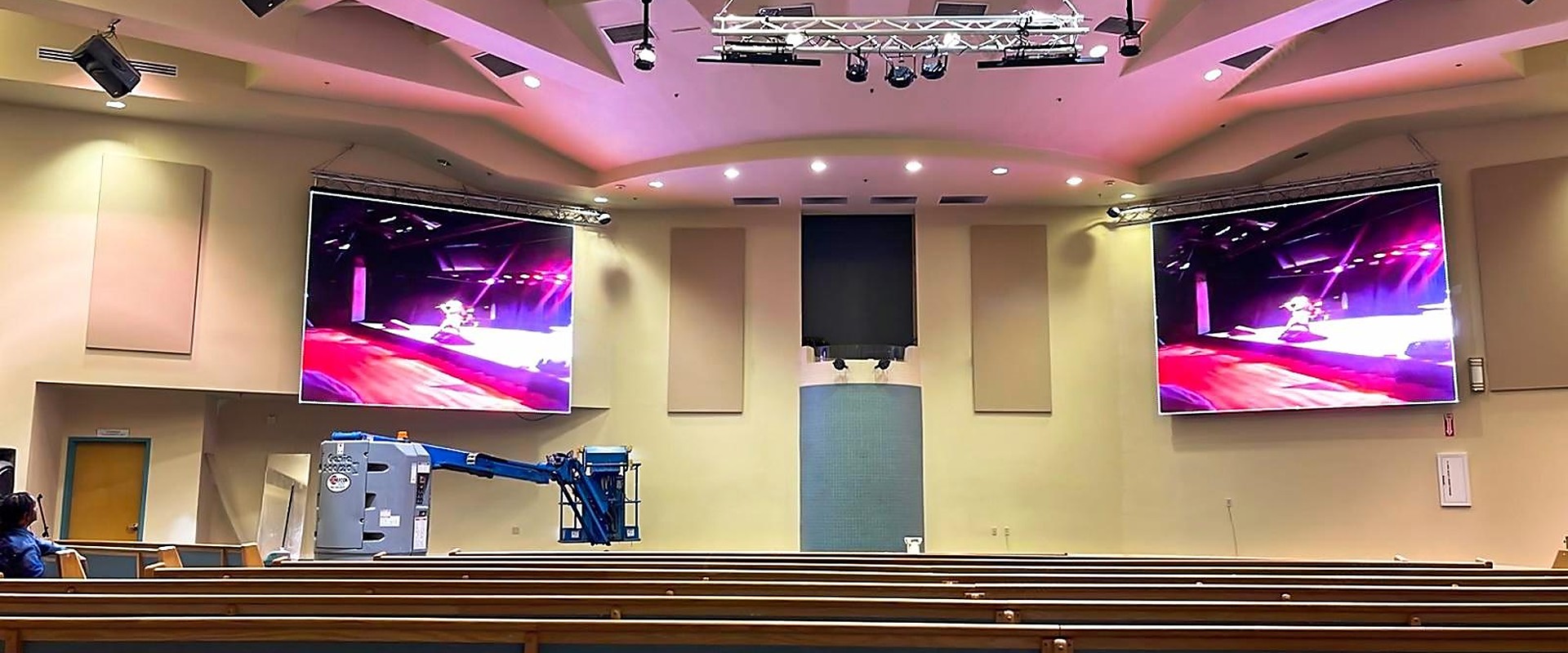
Measure three things: the distance from the platform to the last row, the ceiling height above the platform, and the width available between architectural features. A 500-seat room is typically 18–24 m deep. At 20 m, a 5 m wide screen subtends a comfortable angle for lyrics; at 24 m, 6 m is safer. Height matters because the bottom of the screen should sit above the heads of the front rows — usually 1.8–2.2 m above the platform floor.
Pitch and legibility
Lyrics are the main content: large text, high contrast, read at speed. P3.9 is usually enough at 15–20 m; P2.6 is chosen when the room is deep, when the screen is also used for video, or when the service is streamed and the camera sees the screen. Finer pitch costs more and weighs more, so decide with the actual viewing distance rather than a generic recommendation.
| Room depth | Screen width | Suggested pitch | Brightness |
|---|---|---|---|
| 15 m | 4–5 m | P3.9 | 1,000 nits |
| 20 m | 5–6 m | P3.9 or P2.6 | 1,000–1,200 nits |
| 25 m+ | 6–8 m | P2.6 | 1,200–1,500 nits |
Brightness and room light
Most churches run 800–1,200 nits with dimmable house lights; a bright, glass-walled room needs 1,500 nits or a screen positioned away from windows. More brightness is not automatically better — it washes out the room and increases power and heat. Specify dimming so the screen can match the service, from daylight rehearsal to candlelit evening.
Streaming and camera
If services are streamed, the screen appears in the camera frame and refresh becomes a specification item: 3,840 Hz minimum, 7,680 Hz for close-ups, with 16-bit greyscale to avoid banding on skin tones and gradients. Test with the actual camera and shutter speed before installation — this is the most common post-installation complaint in church projects.
Structure, access and control
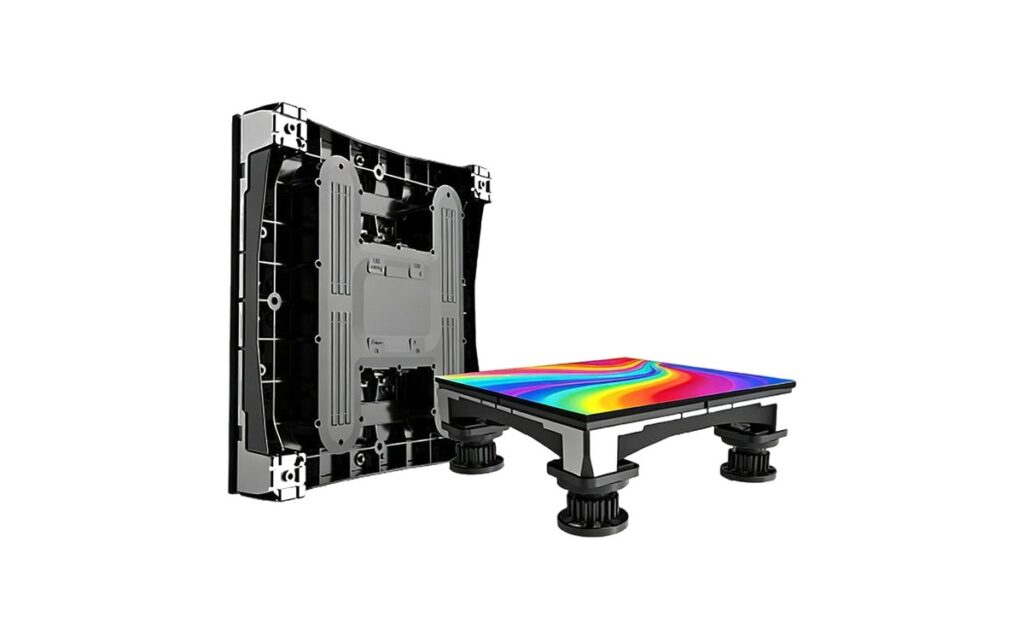
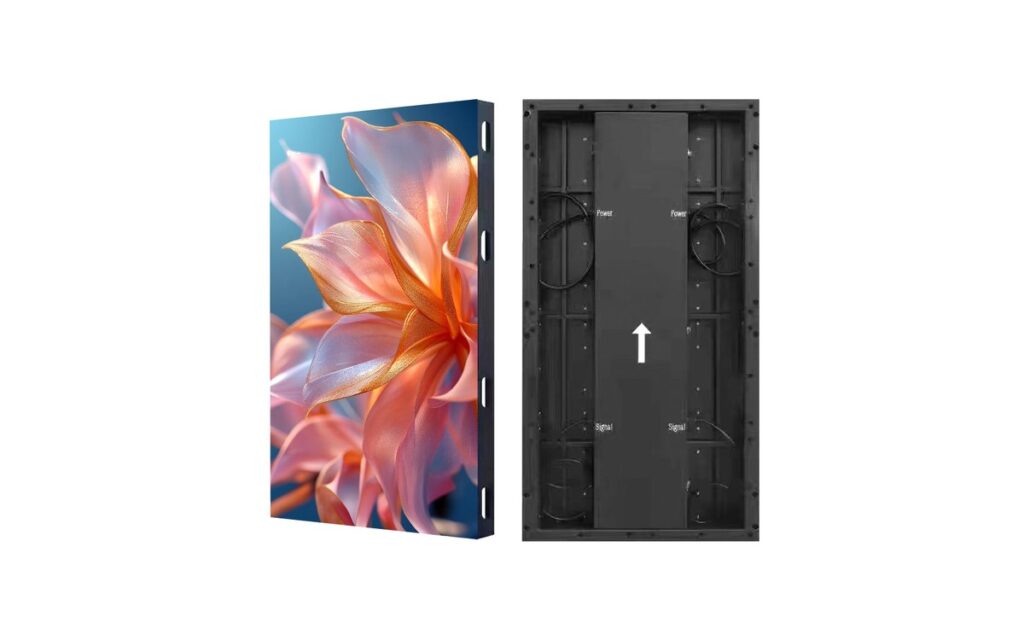
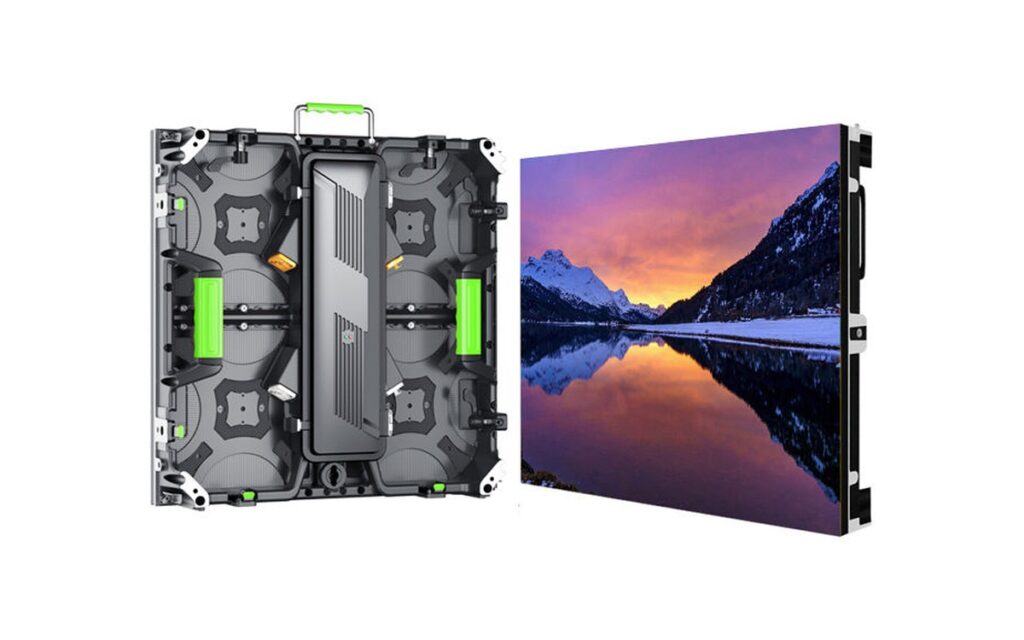
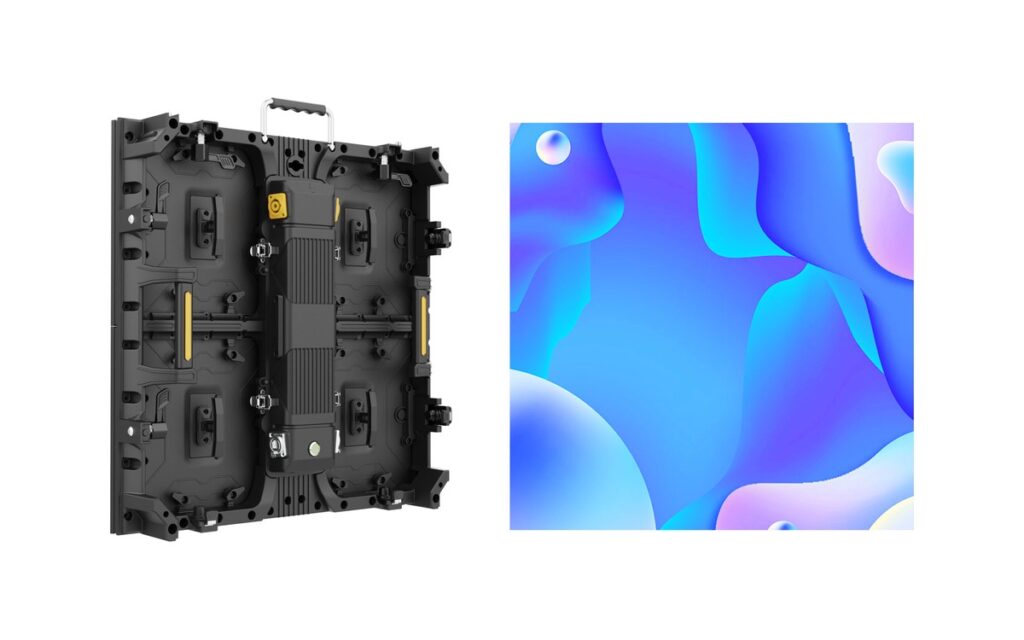
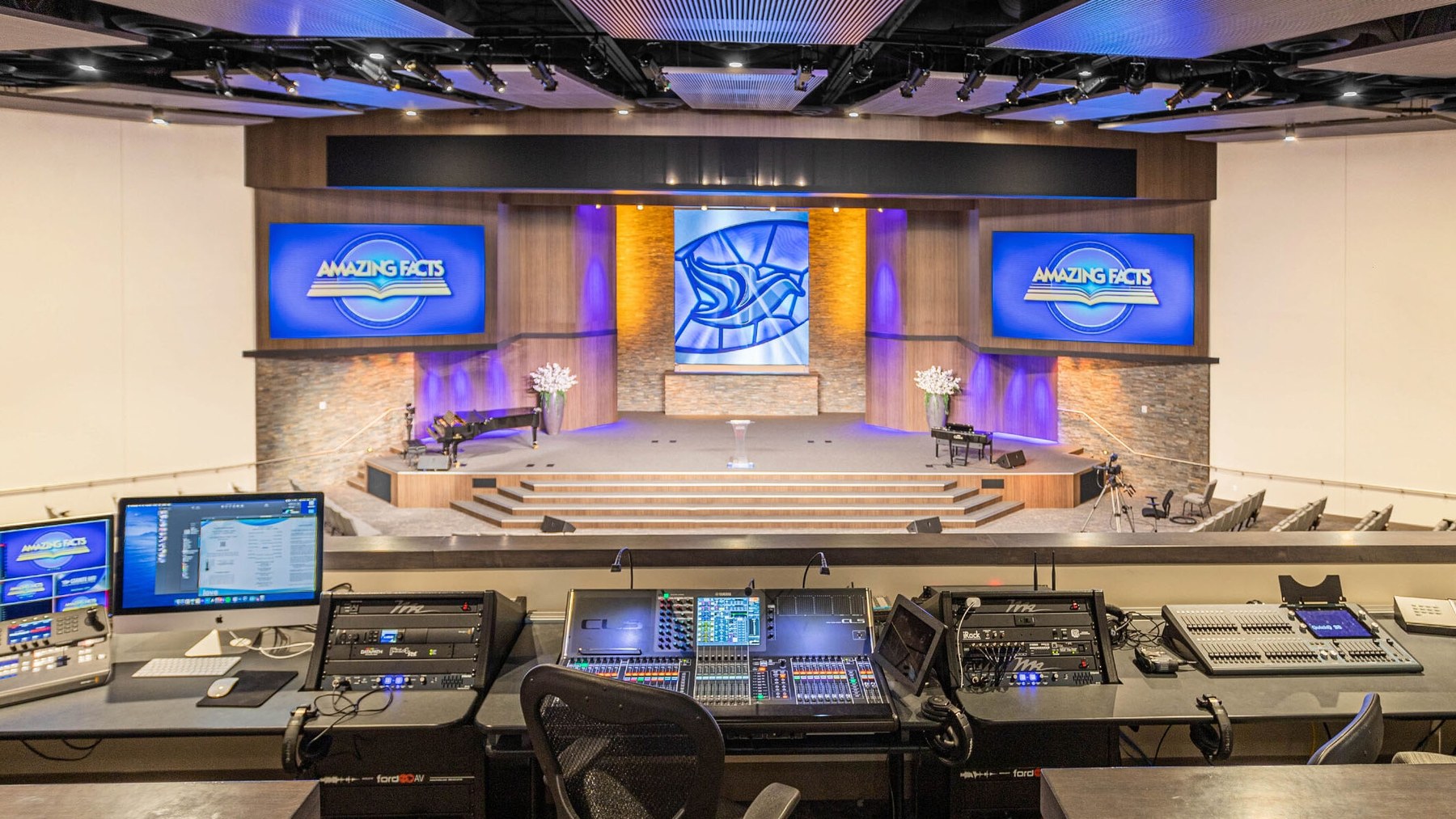
Churches rarely allow heavy steel in historic buildings, so hanging points, wall-mounted frames and floor-supported structures are all options. Decide service access early: front-service screens can sit close to a wall; rear-service screens need a walkway. Put the control position where the operator can see both the screen and the stage, and train two volunteers — a single trained operator is a single point of failure.
Budget factors beyond the screen
The screen is typically 55–70% of the project. The rest is structure, rigging, cabling, control, installation and training. Ask for a quote that separates these lines; a low screen price with undefined installation is not a low project price. Also budget spare modules — a church cannot wait two weeks for a replacement before Sunday.
Content workflow and lyrics
Churches rarely need a creative agency; they need a repeatable workflow. Plan for lower-thirds, lyric slides with a consistent font, a countdown and a simple background loop. Text should be sized for the last row, not the first: a 120 px cap height on a 1920-wide canvas is a reasonable starting point for 20 m rooms.
Two operators should be trained on the same system, with the project file stored in a shared drive. The most common Sunday failure is not the screen — it is a laptop update or a missing file five minutes before the service.
Installation timeline for a church
Most church installations run 4–8 weeks from deposit: one week for drawings and approval, two to three weeks for production, one week for shipping, and two to five days on site for installation and commissioning. Buildings with heritage restrictions or structural work take longer. Plan the installation outside the service calendar and keep a buffer before the first live streamed service.
Ongoing maintenance and spares
Churches run the screen weekly for years, so the maintenance plan matters more than the warranty length. Keep 3–5% spare modules, one or two power supplies and a receiving card, matched to the original batch. Record the batch number: a module supplied two years later from a different bin can show as a lighter or darker patch on a white slide, which is exactly the content churches use most.
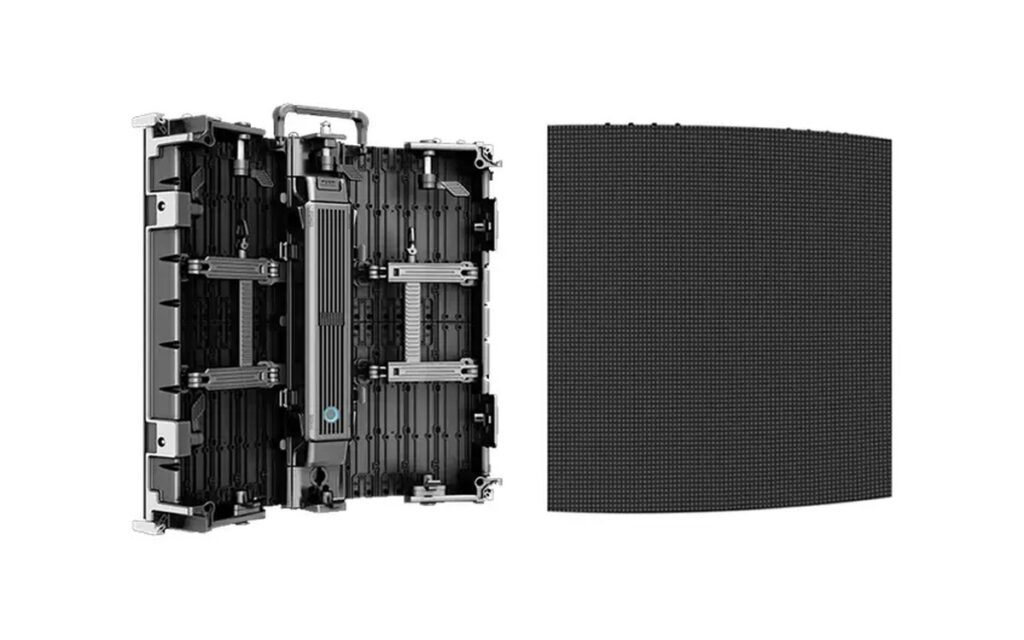
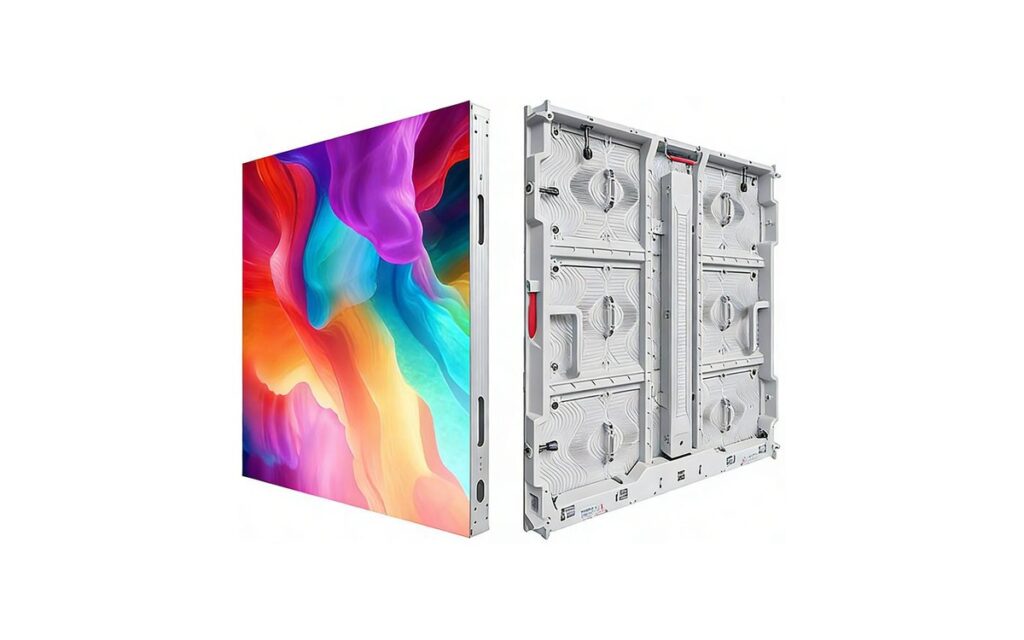
See the church and worship solutions, the 960×960 fixed series for large halls, or the Rental-H series for temporary setups.
Pitch and viewing distance for a 500-seat room
A 500-seat church usually has a longest viewing distance of 25–35 m. At that distance, P4–P6 keeps text legible; P2.5 is only needed for the front rows or for camera close-ups. Sizing the screen for the back row and the pitch for the camera is the usual compromise.
Screen height matters more than width for readability: the bottom of the screen should clear the heads of the front rows, and the top should stay within the vertical viewing angle of the balcony. A wall that is too low gets blocked; too high and the front rows crane.
Content and camera
Church content is a mix of lyrics, scripture and live camera. Lyrics need high contrast and large type; camera needs refresh and colour consistency. If the service is streamed, confirm the refresh option and test a mid-grey frame on camera before the first Sunday.
Common questions
Usually 5–6 m wide and 2.8–3.2 m high, depending on room depth and ceiling height.
Yes for lyrics at 15–20 m. Choose P2.6 for deeper rooms, video content or streamed services.
1,000–1,200 nits with dimming for most rooms; 1,500 nits for bright, glass-walled spaces.
Yes — at least 3,840 Hz, and 7,680 Hz if the camera comes close. Test with the actual camera.
Front service saves space behind the wall; rear service is easier where a walkway exists. Decide before the structure is designed.
For the back rows, yes. If the front rows are within 6 m, P5 can look coarse — consider P3.9–P4 for a mixed audience.
Only if the seating is wide and the side seats matter. A flat wall is cheaper and easier to content-map.
A 500-seat wall is typically a two-to-three day install with a small crew, plus commissioning. Structure work is usually the variable.